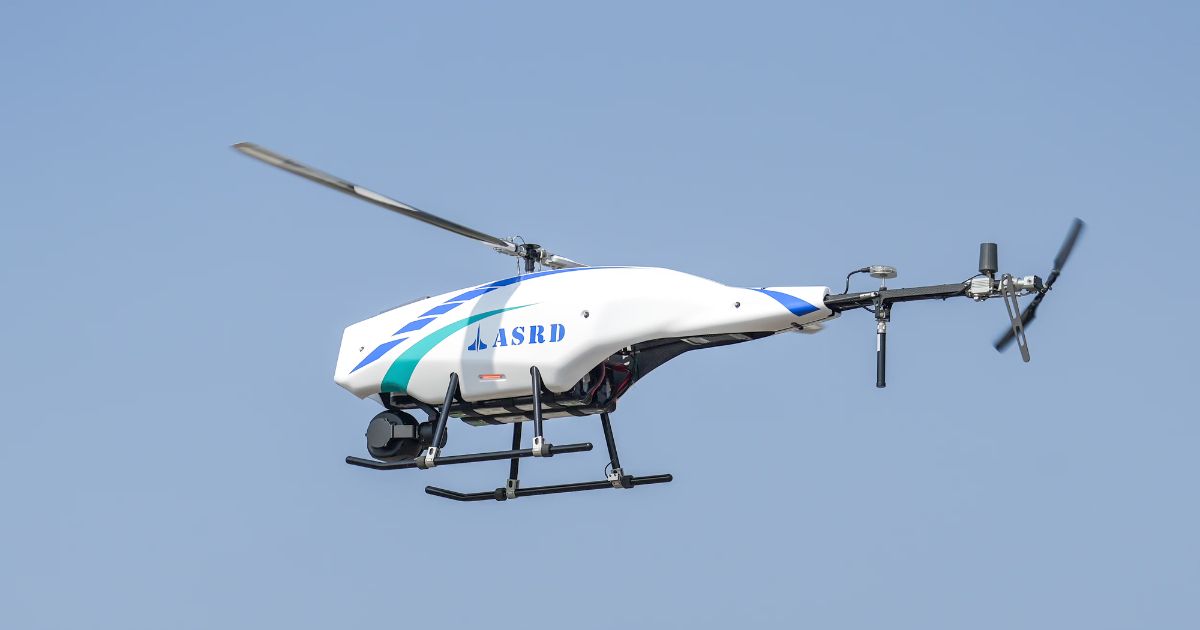
Confronted with an increasingly assertive China, Taiwan is hurrying to assemble a domestic drone force to ward off an invasion by 2027. As China’s military exercises escalate across the Taiwan Strait and Beijing openly menaces annexing the island by force, Taipei regards unmanned vehicles—air and sea—as pivotal to its “porcupine strategy” of asymmetric warfare.
But for all its political will and technological acumen, Taiwan’s drive is hitting scale constraints, supply chain challenges, and more profound strategic blind spots.
Small Numbers, Big Threat
Taiwan’s geography provides it with natural defense. It has a mountainous topography and shallow beaches, making it difficult for amphibious landings. However, China’s fast-paced military modernization, including drone warfare, has increasingly diminished these factors. Su’ao Bay, only 60km from possible PLA landing points, hosted an expo where three Taiwanese sea drones were unveiled: Carbon Voyager 1, Black Tide I, and Sea Shark 800.
But although the government has initiated projects such as the “Drone National Team,” goals are still modest. By 2028, Taiwan hopes for 15,000 dual-use drones a month. Orders from the military are still low—only 700 military-grade UAVs and 3,422 dual-use drones so far. Ukraine, on the other hand, aims to manufacture 200,000 drones a month by 2025. According to analysts, Taiwan can very easily consume thousands of drones each day in the first weeks of war, far more than its current production.
Tech Talent, But Strategy Stalls
Taiwan boasts rich tech talent. It is the world leader in chip manufacturing and advanced manufacturing. But its drone industry still relies on Chinese components, particularly for batteries, GPS modules, and sensors. Even military drones have parts from rival supply chains. And even though Taiwan has begun to cooperate with allies such as Japan, Poland, and Germany, complete decoupling still proves elusive.
Defence analysts also caution against an underlying weakness: strategy. Taiwan concentrates on deterring PLA landings but has no strategic planning for what comes after an invasion. Urban combat, jungle-ground drone attacks, and electronic warfare are not properly anticipated. On-the-ground battlefield feedback in real world battles is also lacking.
Domestic Politics Could Undercut Defence
Whereas Taiwan’s governing Democratic Progressive Party (DPP) has increased military budgets, the opposition Kuomintang (KMT) generally opposes defence rises. President William Lai desires to increase expenditure to 3% of GDP, but the KMT-majority legislature has already cut his proposed 2.45% defence budget. There is political will from the top, but from the legislature, it is shaky.
Taiwan’s military still grapples with its authoritarian legacy and old systems. Analysts caution that until civilian leadership and legislators are squarely in sync, plans will remain stuck before scale.
Race Against Time and Supply Chains
Taiwan’s defence ministry recently established its first drone army unit. The Navy will soon follow suit with UAVs and unmanned surface vehicles. But producers still worry about backlash from China, particularly after Beijing sanctioned US drone producer Skydio for dealing with Taiwan.
Private companies are concerned with profitability and survival. Most are not yet able to substitute Chinese components. Friendly nations’ critical components are up to 10 times more expensive. Despite these challenges, the export of drones increased from 290 units in 2023 to over 3,400 during Q1 2025.
Nevertheless, experts point out that a full-scale war would easily deplete Taiwan’s current inventory of drones. Its success lies not so much in production or hardware, but in intelligent strategy, harmonized budgets, and combat-ready systems.
Innovation Isn’t Enough Without Execution
Taiwan is running out of time. The tech industry here has the capabilities. Intent on the political side is there. But scaling up, securing the supply chain, and creating a coherent drone war plan are pressing concerns.
This is no longer hypothetical. Taiwan needs to build not just an army of drones, but a complete, functional strategy that will make it count.