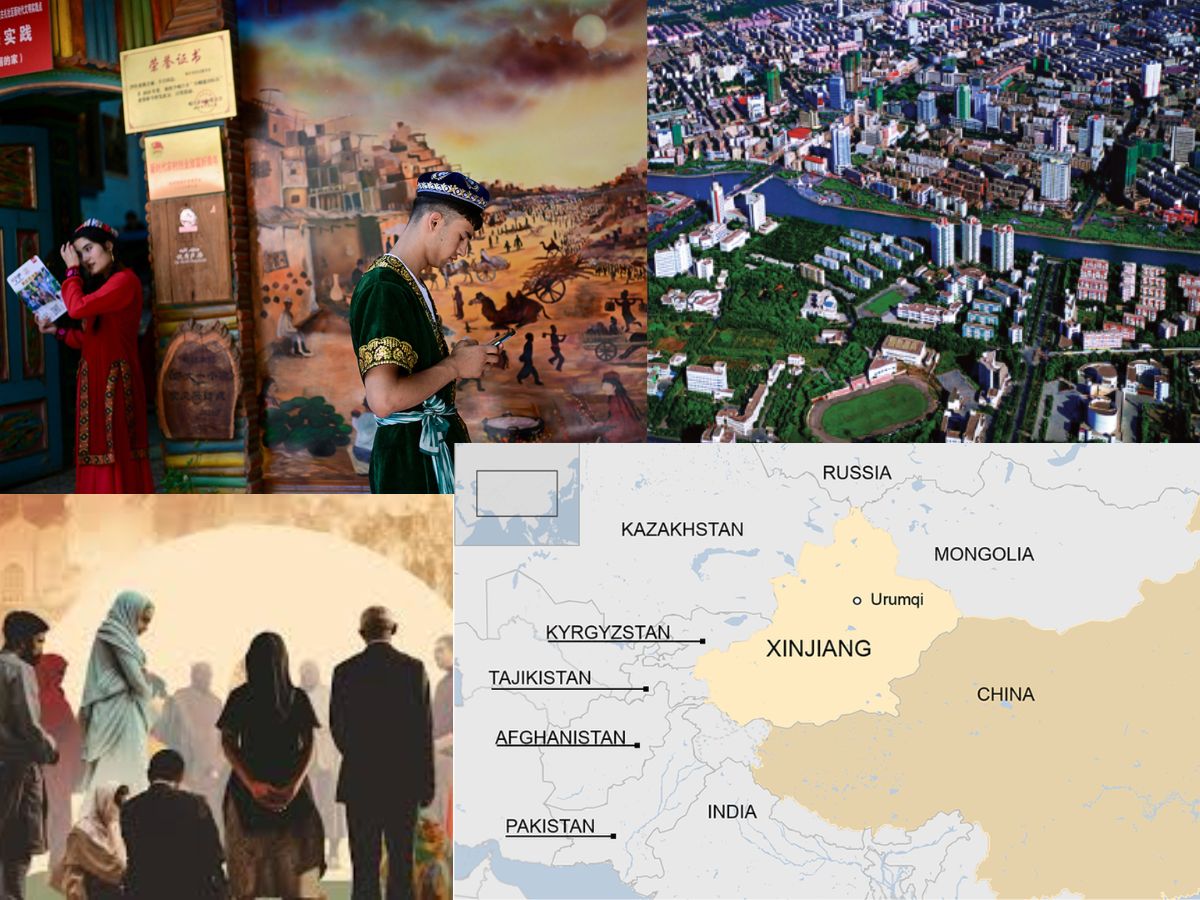
What is happening in Xinjiang? Even as Chinese authorities talk about stability and modernisation, a far more controlled transformation is taking place. Beneath the official storyline, the core of Uyghur cultural life is being carefully and systematically altered. This process raises urgent questions not just about one region, but about how identity itself can be re-engineered in the 21st century.
The Physical Erasure of a Homeland
How do you change a culture? You start by changing its landscape. Cities across Xinjiang that were once defined by centuries of Uyghur history now showcase uniform urban grids. The old quarters of Kashgar, long considered the cultural soul of the Uyghur people, were famously cleared. This was done under the banner of “heritage protection,” but the result is a sanitised version designed for tourism. Streets that once hosted traditional community life now feature state-approved architecture. For residents, the visual change is so profound that the streets of their youth have become unfamiliar.
The Quiet War on Language
Language shapes identity, and Uyghurs are feeling that identity come under pressure. Mandarin-first schooling has pushed their language out of focus. Teaching in Uyghur has been reduced sharply, and native-language books have been taken out of many classrooms. Parents now think twice about speaking Uyghur in public institutions. This linguistic shift represents a fundamental rupture, severing a new generation from its rich literary and oral traditions.
The Disappearance of Spiritual Spaces
Where can a community go when its holy sites vanish? Faith is central to Uyghur culture, but that link is being dismantled on the ground. Numerous mosques have been closed, converted, or turned into uniform, state-managed buildings. Old family shrines have been demolished or fenced away. These are not just building changes; they remove the places that carry shared memory and sustain spiritual life. Without them, long-held traditions could fade away.
Rewriting History and Silencing Art
The attempt to reshape identity goes deep into history and the arts. Those writers, poets, and historians who upheld Uyghur culture have faced arrest or subtle pressure to remain silent. In their absence, the state presents a softened, controlled version of culture. Traditional music and dance are shown on official platforms, stripped of meaning and turned into surface-level performances. Historic Uyghur place names are being changed, removing the stories the land once held.
The Role of Technology in Control
Xinjiang’s massive surveillance system is widely recognised, but its role is more than watching where people go. It tracks cultural behaviour too. Algorithms can flag visits to religious events, the use of Uyghur-language apps, or contact with cultural figures. In such a climate, even keeping cultural habits becomes risky. Technology turns into a tool designed to control and discourage expressions of ethnic identity.
Also Read: Satellite Images Show Sulphur Dioxide From Ethiopia’s Hayli Gubbi Eruption Reaching India
A Global Concern
Xinjiang’s reality is more than a crisis for one region; it is a global lesson on cultural survival. The controlled dismantling of Uyghur culture proves how modern state power can reshape identity with alarming precision. For the world, it presents critical questions about human rights, the ethical limits of technology, and the international community’s role in protecting cultural diversity. Uyghur culture continues through communities abroad and quiet defiance at home, yet its controlled erosion in Xinjiang should be a concern for everyone.