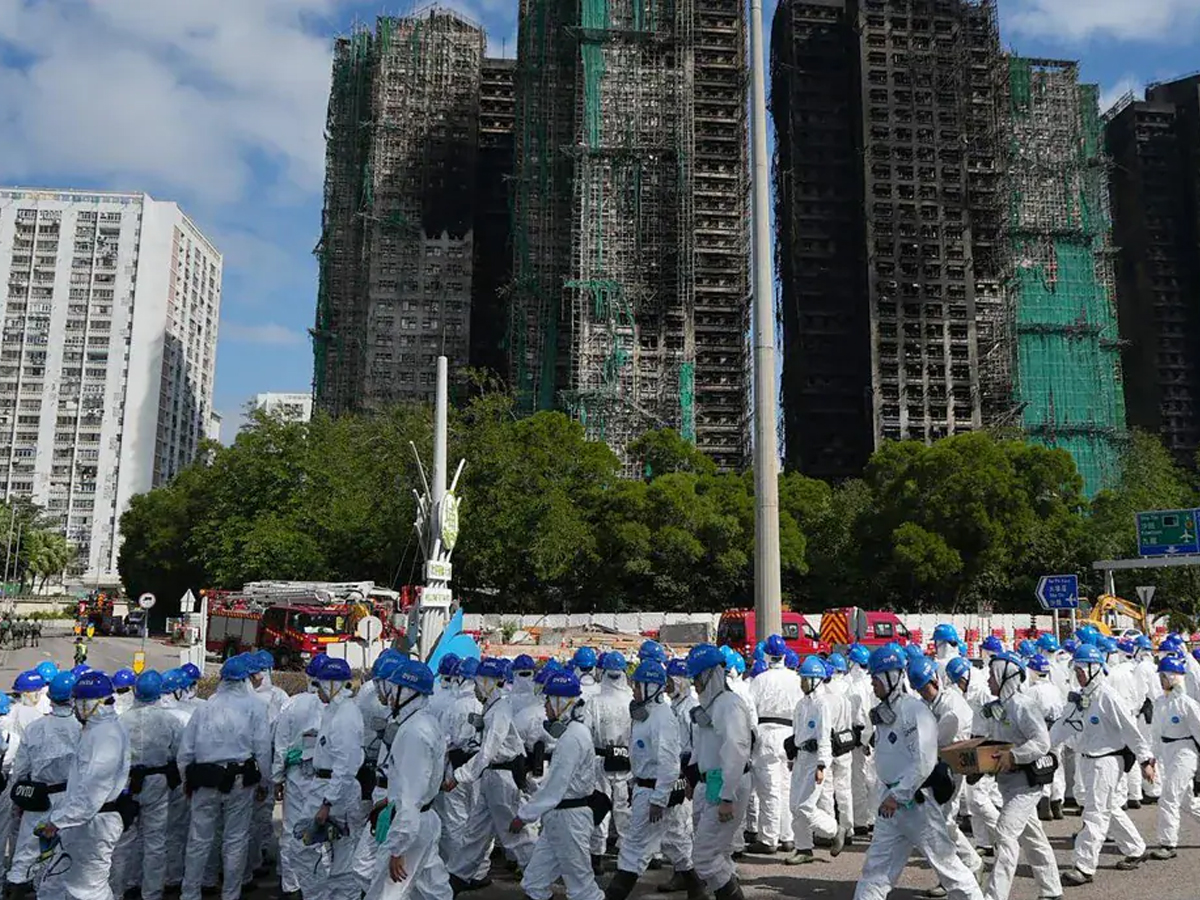
A tragic residential fire ripped through eight high-rise towers at Wang Fuk Court in Hong Kong’s Tai Po district. What began as a small fire on the first floor of one block on Wednesday afternoon erupted into a full-scale inferno. Smoke and flames engulfed neighbouring towers, reducing homes to charred skeletons. By evening, 146 people had died, and dozens were injured or missing. Investigators fear the toll may rise further.
Devastating Hong Kong Fire: Burnt Buildings, Charred Remains, Silent Horror | In Photos
Inside the burned apartments, walls buffeted by smoke stains, windows frame scorched air-conditioner units hanging like grim reminders. Debris, ash, and twisted metal litter the floors once filled with life. Outside, the skyline shows blackened towers — once high-rises, now burnt out shells. The scale of damage has left entire families displaced, mourners in shock, and survivors scrambling for answers.
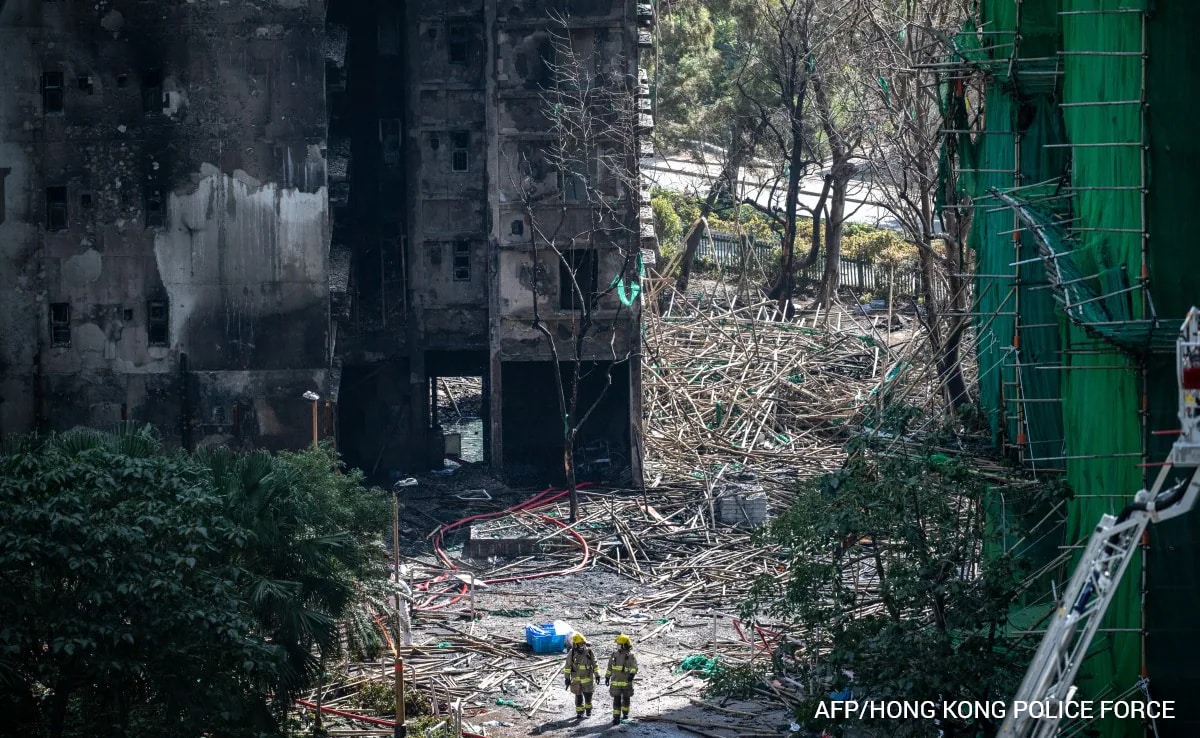
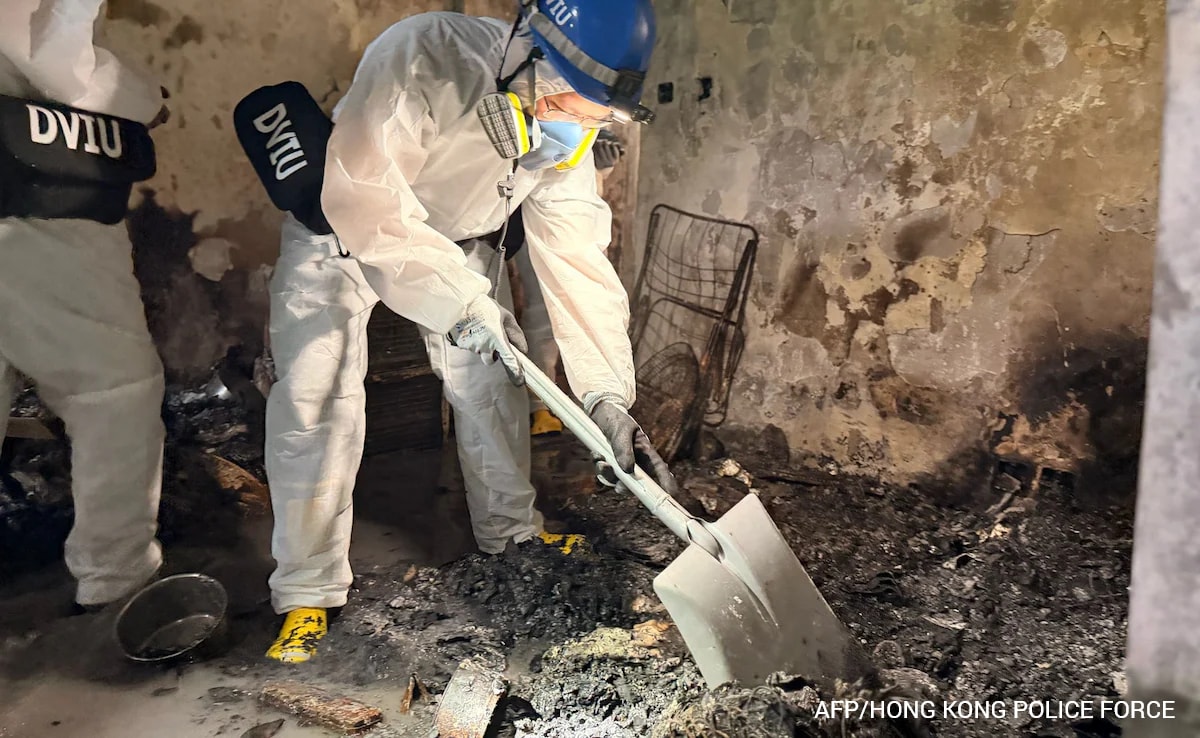
At the scene, disaster-victim teams searched flats, staircases, hallways, and rooftops. Armed with protective gear, masks, and shovels, they sifted through debris in search of bodies, personal belongings, or clues. Many victims remain unaccounted for or trapped under the rubble.
How Did the Fire Start in High-Rise Buildings?
Preliminary reports suggest the fire may have begun on the first floor, possibly triggered by a discarded cigarette near the building’s outer wall. A video circulating online shows a person smoking close to the wall just before flames erupted. Some investigators have also raised questions over the recently done renovation — balconies and windows had attached Styrofoam panels that are highly flammable.
At the time of the blaze, buildings were wrapped in traditional bamboo scaffolding and covered by green protective netting. That renovation material — combined with flammable external fittings — may have accelerated the fire’s spread, turning one burning flat into a disaster engulfing multiple towers.
Rescue, Victims, and The Human Toll
As of the latest count, 146 lives have been lost. Many more are injured or missing. Officers continue search operations across all impacted blocks. Among the deceased and missing are families, elderly people, and children. Outside the complex, residents and strangers alike have laid flowers, soft toys, and messages like “Never Forget Never Forgive” — a public outpouring of grief and solidarity.
Medical teams treat over a dozen critical patients. Many survivors now face homelessness, loss of loved ones, and uncertainty ahead.
Safety Concerns, Investigation, and Public Outcry
The disaster has raised serious questions about building safety standards, the use of flammable materials in renovations, and emergency-response readiness. Hong Kong authorities have launched an interdepartmental task force. Investigators have already arrested several people in connection with the fire — some facing manslaughter charges.
Critics demand stricter building codes, a ban on flammable external materials, and better fire-safety oversight. Many believe the tragedy might have been prevented if proper safety norms and timely fire escapes had been in place.
What’s Next: Search, Support, and Rebuilding Hope
Authorities promise to continue rescue operations until every victim is accounted for. They also plan structural safety surveys across the housing estate to prevent further collapse. Meanwhile, community groups and charities have mobilized to provide shelter, food, and counselling to displaced residents.
For Hong Kong, the Wang Fuk Court blaze stands as a horrifying reminder: even modern high-rises can become death traps without fire safety. As investigations proceed and people mourn, the city faces a long road of healing, rebuilding, and ensuring safety for all residents.