
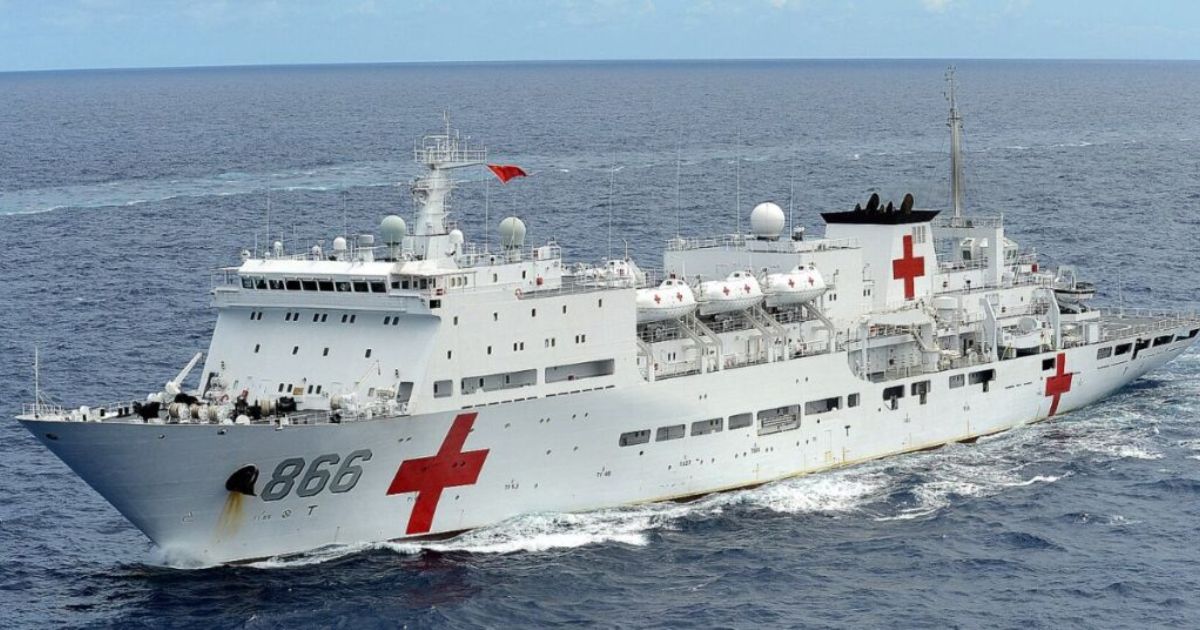
China Deploys Mission Harmony 2025
China has sent its new naval hospital ship, CNS Silk Road Ark, on a 220-day world outreach mission across the South Pacific and Latin America regions historically considered America’s sphere of strategic influence. The mission, officially designated as Mission Harmony 2025, integrates medical aid with cultural diplomacy, reflecting Beijing’s increasing soft power aspirations.
The Silk Road Ark left the Fujian province in Quanzhou early in September, with destinations scheduled in Nauru, Fiji, Tonga, Mexico, Jamaica, Barbados, Brazil, Peru, Chile, and Papua New Guinea. The Defence Ministry of China stated that the deployment is intended to “enhance friendly cooperation” in the form of medical services and military medical exchange with other nations.
A Successor to the Peace Ark
This is the first international mission of the Silk Road Ark since it was commissioned in 2024, after the Peace Ark, which successfully embarked on Mission Harmony 2024 to Asia and Africa. The previous trip broke records called at 13 nations, travelled 30,000 nautical miles, treated close to 83,000 patients, and performed more than 1,300 surgeries.
The new ship is designed with state-of-the-art facilities for treatment, emergency rescue, and humanitarian outreach, underscoring China’s ambition to combine soft power and strategic presence.
ALSO READ: Trump Says ‘We’ve Lost India and Russia to Darkest China’ After SCO Summit
Geopolitical Tensions with the US
The timing of Mission Harmony 2025 coincides with the US Navy’s Operation Continuing Promise 2025, a humanitarian mission aboard the USNS Comfort in the Caribbean and Latin America. The concurrent missions highlight a soft power naval competition between Washington and Beijing.
Experts point out that China’s deployment has wider political consequences. Its expanding naval and diplomatic presence in Latin America via trade, infrastructure investments, and suspected surveillance activities has increasingly nudged the US aside. As Washington remains occupied with Venezuela and increases military pressure, while concerned about narco-terrorism, Beijing’s increased presence near US shores presents a daring strategic move.
Beyond Medicine: A Strategic Signal
Although formally billed as a humanitarian exercise, Mission Harmony 2025 also represents China’s part in the larger policy competition with the US. In the delivery of medical assistance while declaring naval presence, Beijing is applying soft power resources to serve hard power objectives, transforming dynamics in an area previously securely located in Washington’s sphere.