HT Syndication
New Delhi [India], June 22: For most consumers, quick commerce begins and ends on an app.
A few taps, a short wait, and groceries, electronics, personal care products or household essentials arrive at the door. The promise is simple: delivery in minutes.
But long before a consumer places an order, another race is already underway.
For brands selling on platforms such as Blinkit, Zepto, Instamart, Amazon and Flipkart, the challenge is no longer only about creating demand. It is also about ensuring that products reach the right warehouse, at the right time and in the right quantity. As quick commerce and marketplace platforms tighten their inbound supply chains, most now work with fixed delivery appointments for stock entering their warehouses.
A missed slot can lead to a shipment being delayed, rejected or pushed to another day. For brands, that can quickly translate into stockouts, lost sales, additional logistics costs, penalties and customers choosing the next available product.
That is the problem Pune-based Quickshift has been working to solve.
Over the past year and half, Quickshift has built a specialised operation around appointment-based deliveries for brands selling through quick commerce platforms, marketplaces and distributor warehouses. It now manages deliveries into leading platforms including Zepto, Blinkit, Instamart, Amazon and Flipkart.
Quickshift says it currently maintains 98% appointment adherence across its delivery network. In cities where deliveries are handled through its own fleet, the company says adherence goes up to 99.9%, along with same-day delivery capability.
“We realised that while brands were investing heavily in driving demand, many were still struggling with something far more basic: getting inventory into warehouses on time,” said Anshul, Founder and CEO of Quickshift. “As quick commerce grows, staying in stock has become just as important as generating demand.”
The problem, at its core, is coordination.
Each purchase order comes with a timeline. Each warehouse has a fixed appointment window. Each delay, missed update or last-minute logistics change can decide whether a shipment is accepted or pushed back. For brands working across multiple platforms, cities and logistics partners, the process can quickly become fragmented.
Quickshift has built its technology platform around this gap. The system tracks shipments from booking to delivery, manages warehouse appointments, prioritises urgent purchase orders and alerts teams when a shipment is at risk of missing its slot. Brands get a single dashboard to monitor movement, proof of delivery and exceptions, instead of relying on scattered updates across calls, emails and different logistics providers.
The company follows a hybrid model. Logistics partners allow it to provide service across the country, while its own fleet in major cities gives it greater control over time-sensitive deliveries.
That control, Quickshift says, matters most when a delivery cannot afford to miss its window. With its own dedicated vendor network, the company can reduce last-minute carrier changes, cut down handovers, move inventory faster and respond more directly when a shipment needs intervention.
Fewer touchpoints also reduce the risk of damage. Faster GRN visibility and clearer return movement help brands redirect or resell stock more quickly. For companies selling through high-velocity commerce channels, the outcome is faster replenishment, fewer stockouts and better product availability.
“Everyone sees the ten-minute delivery promise,” said Anshul. “What happens before that is just as important. If inventory does not reach the warehouse on time, the consumer never gets the chance to buy it. That is the problem we are focused on solving.”
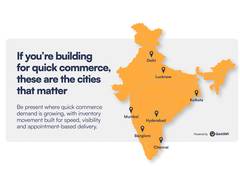
As quick commerce expands beyond early categories and deeper into everyday consumption, the pressure on brands to maintain availability across platforms is expected to intensify. Quickshift plans to extend its own fleet operations to more cities, increasing the share of deliveries handled through infrastructure it controls directly.
About Quickshift
Quickshift is a Pune-based logistics and fulfilment company with pan-India fulfilment capabilities. The company supports brands with fulfilment, B2B and B2C shipping across domestic and international markets, with integrations across major commerce and marketplace platforms. Through its technology-led fulfilment network, appointment-based delivery operations and hybrid logistics model, Quickshift helps brands move inventory faster, more reliably and with greater visibility across sales channels.
Quickshift is funded by Atomic Capital, Grand Anicut Fund and Axilor Ventures.
(ADVERTORIAL DISCLAIMER: The above press release has been provided by HT Syndication. ANI will not be responsible in any way for the content of the same.)
(The article has been published through a syndicated feed. Except for the headline, the content has been published verbatim. Liability lies with original publisher.)