
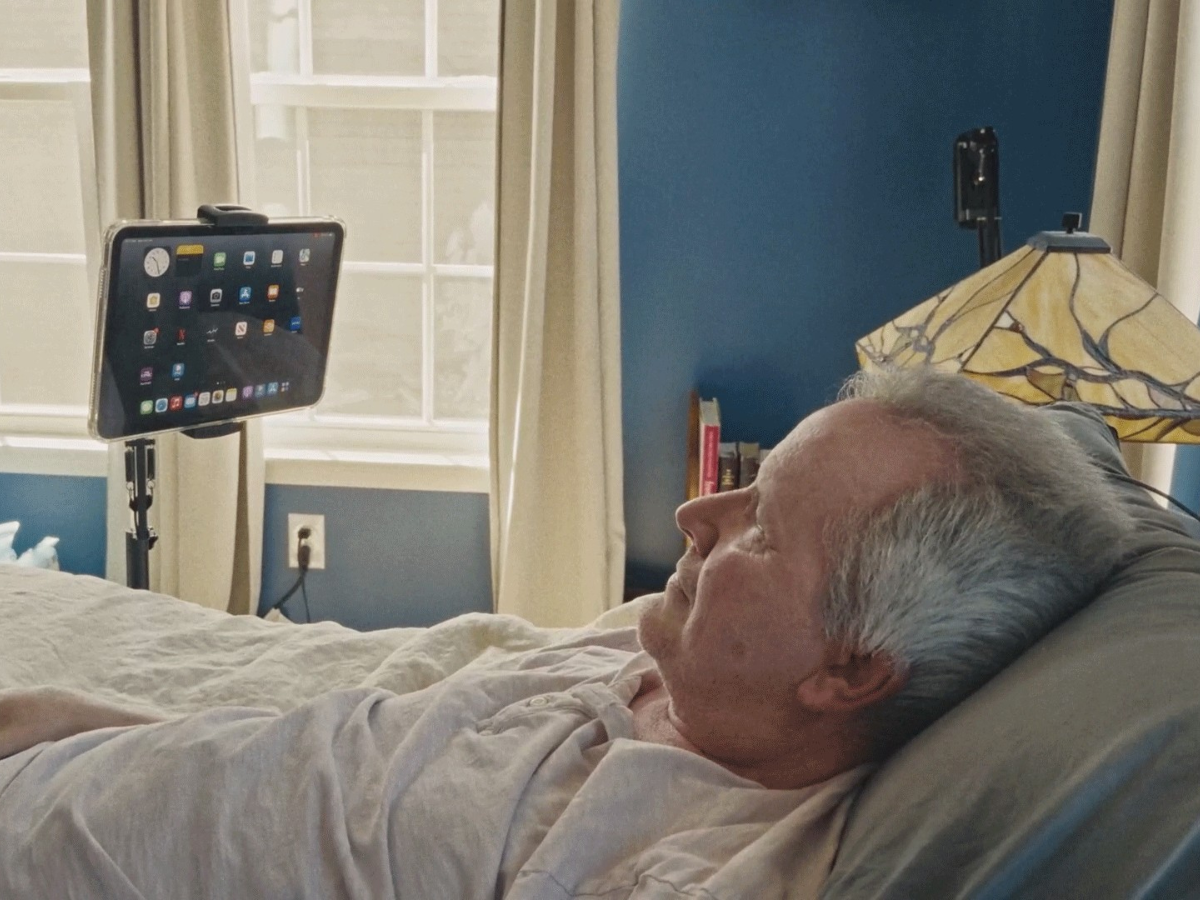
Synchron, a brain-computer interface (BCI) category leader, announced today the first-ever public demonstration of one person using an iPad controlled solely by thought, utilizing Apple’s native accessibility features and new Brain-Computer Interface Human Interface Device (BCI HID) protocol.
Mark’s Groundbreaking Interaction: A Glimpse Into the Future
The video showcases Mark, a patient in Synchron’s COMMAND clinical trial and a man living with ALS, who utilizes the firm’s implantable BCI to move around the iPad home screen, launch apps, and type text all without moving his hands, speaking, or looking.
This release comes after Apple in May made an announcement of a new BCI Human Interface Device (BCI HID) input protocol. With the new protocol, Apple operating systems can, for the first time, utilize brain signals as a native input source.
Synchron CEO: “A Glimpse Into the Future of Human-Computer Interaction”
“This is the first time the world has seen native, thought-driven control of an Apple device in action,” said Dr. Tom Oxley, CEO and Founder, Synchron. “Mark’s experience is a technical breakthrough, and a glimpse into the future of human-computer interaction, where cognitive input becomes a mainstream mode of control.”
ALSO READ: Texas Governor Threatens to Oust Democrats Over Trump-Backed Redistricting Walkout
Apple’s built-in accessibility feature, Switch Control, and Synchron’s Stentrode™ device make Mark’s iPad use possible by identifying motor intention from blood vessels in the brain. These signals are wirelessly relayed to an external decoder, which connects directly to iPadOS using the new HID protocol. The system supports closed-loop communication, whereby an iPad, iPhone, or Apple Vision Pro exchanges contextual screen information with the BCI decoder to refine real-time performance, allowing accurate, intuitive control based on only neural signals.
“I Thought I Had Lost My Independence” – Mark’s Emotional Testimony
“When I lost the use of my hands, I thought I had lost my independence,” said Mark. “Now, with my iPad, I can message my loved ones, read the news, and stay connected with the world, just by thinking. It’s given me part of my life back.”
ALSO READ: US May Impose $15,000 Visa Bonds on Tourists in New Crackdown on Overstays
Synchron was the first to introduce a permanently implanted BCI to clinical trials, and its endovascular method foregoes open brain surgery, positioning it for scalability in real-world settings.
Looking Ahead: A Watershed Moment for BCI Technology
This demonstration today represents a huge leap in assistive technology and a preview of human-computer interaction’s future. Synchron is ongoing with controlled rollouts of the BCI HID experience with clinical participants, with wider availability planned.
This is a watershed moment in bringing BCI technology to reality, to scalability, and into the consumer-based global ecosystem beyond the confines of clinical trials to the masses.