
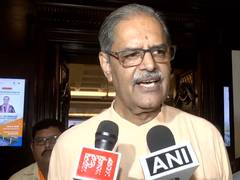
New Delhi [India], June 6 (ANI): Odisha Deputy Chief Minister Kanak Vardhan Singh Deo used the Agrivoltaics Conclave in Bhubaneswar to urge farmers to shift away from urea-heavy practices and adopt short-duration crops and natural farming.
“Both the Union Agriculture Minister and the Prime Minister have urged the people of the state to cultivate short-duration crops and to adopt organic or natural farming methods…we have observed that over the past 70 years, the government conditioned people to rely heavily on urea, while the focus was solely on maximizing production, no concern was shown for public health,” he said. Citing this year’s rainfall data and advisories, the Deputy CM said the PM has appealed to farmers to opt for short-duration crops to avoid losses, and stressed that “the use of urea depletes the soil’s productivity. To counter this, the PM has consistently advocated for replacing it with potash and neem-coated urea,” he said.
The conclave focused on agrivoltaics — solar-powered farming — as a way to boost farmer incomes while addressing land and water stress. Gajanan Kale, CEO of TPCODL, said the objective was to promote the model further in Odisha because “it will double the income of farmers…one is the selling of solar energy, another is the selling of their crops.”
He outlined two state tracks: a utility-led aggregation model for poor customers with sanctioned load under 1 kW, and Odisha’s rollout under PM Surya Ghar Yojana. TPCODL has installed more than 1 lakh rooftop solar systems in the state and is running transparent competitive bidding to devise tariffs for solar energy sold by farmers.
Srinivas Krishnaswamy, CEO of Vasudha Foundation, highlighted why agrivoltaics matters amid India’s water crisis.
“For 1 MW solar panels, we need approximately 2 to 4 acres of land…if farmers’ land is taken, then food security will be a problem, and farmers’ income will be lost,” he noted. Beyond dual income from crops and power, panels help retain soil moisture as groundwater levels fall. “The benefits of agri-photovoltaics are double. It will make money from production and can also generate income from solar generation,” he said.
Krishnaswamy added that scaling up needs a clear policy framework, government intent, land-use guarantees, and financial/lease mechanisms so farmers can build projects themselves or bring in developers. With Odisha pushing short-duration, low-input crops on one hand and dual-use solar on the other, the state is positioning agrivoltaics as both a farm-income and climate-resilience tool. (ANI)
(The article has been published through a syndicated feed. Except for the headline, the content has been published verbatim. Liability lies with original publisher.)