
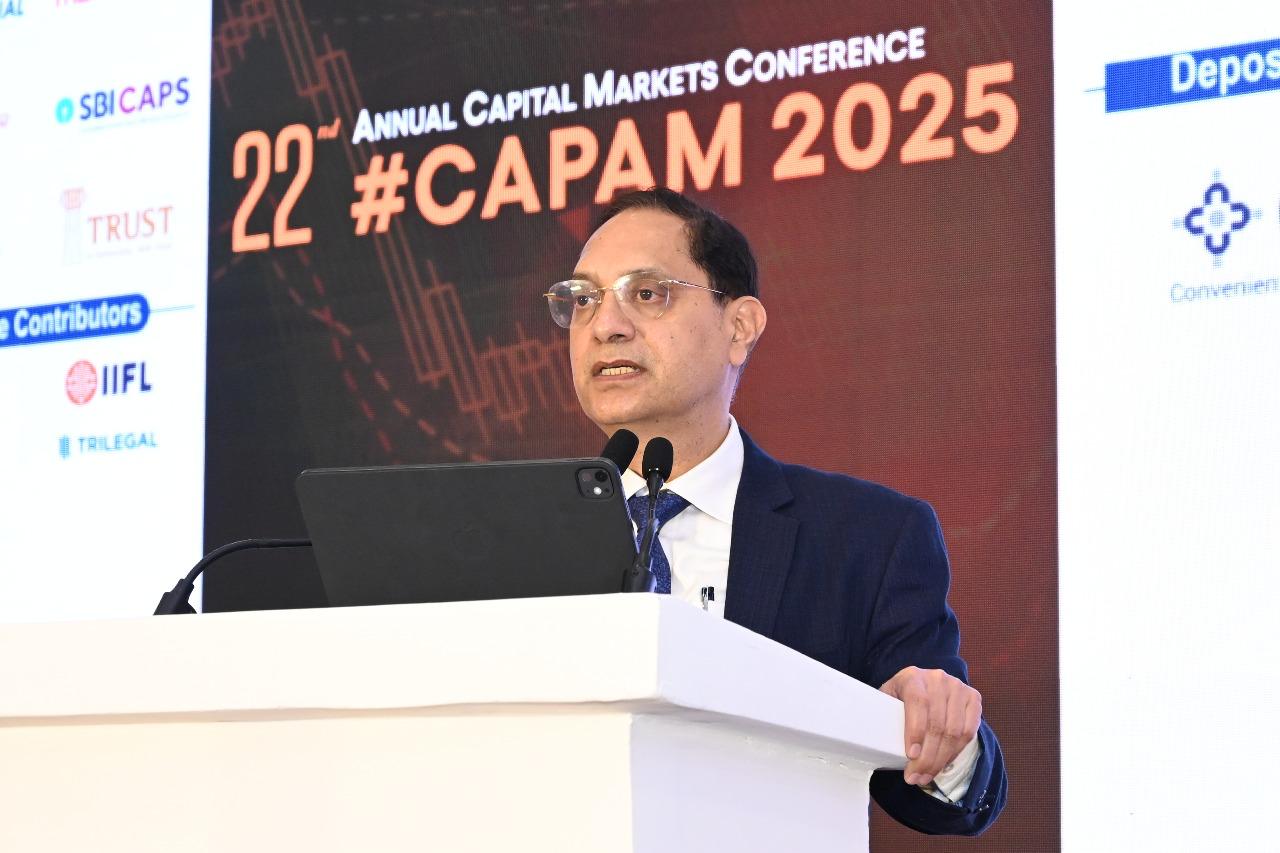
The Securities and Exchange Board of India (SEBI) is considering steps to extend the tenure and maturity of equity derivatives products in a calibrated and phased way. The strategic F&O decision was outlined by SEBI Chairman Tuhin Kanta Pandey at the FICCI Capital Market Conference 2025. The objective is to increase the use of derivatives for hedging and long-term investment objectives as well as for overall market development.
ALSO READ | 21 August, 2025 : Markets Closed with Marginal Gains amid Lethargy
Expansion in Cash Market and Requirement for Quality Derivatives
Pandey pointed out that the Indian cash market has seen high growth, with daily traded volumes doubling in a three-year span. Though such growth is welcome, SEBI is aware of ultra-short-term derivatives trading dominating the market, which has generated concern about market volatility and quality. The regulator hopes to promote derivative products with longer maturities to give investors more effective tools to manage risk and capital formation.
Reducing Short-Term Speculation and Investor Losses
A major motivation behind this move is SEBI’s research indicating that around 91% of individual traders in the futures and options (F&O) segment suffered net losses in fiscal year 2025, collectively losing over ₹1 lakh crore. This statistic underscores the risks of short-term speculative trading dominating the market. SEBI’s intention to improve maturity profiles for derivatives is designed to shift trading activity towards more sustainable, long-term investment strategies rather than speculative behavior.
ALSO READ | Reformed Slabs: ACs, Daily-use Products May Get Huge GST Slash
Increasing Role and Regulatory Strategy for AI
Apart from derivatives, Tuhin Pandey also spoke about the increasing role of artificial intelligence (AI) in capital markets. AI technologies hold immense promise for changing customer experience, improving risk assessment, fraud detection, and boosting financial inclusion. Increased adoption of AI comes with new challenges, especially in data protection and cybersecurity.
To counter these threats, SEBI is developing guiding principles for employing AI and ML in financial markets. The principles stress a tiered approach to deploying AI, sound data and cybersecurity measures, and transparent accountability mechanisms. The regulatory strategy is designed to position AI as an aid technology that supports human judgment and not substitutes for it. This goes in line with the Reserve Bank of India’s latest AI committee recommendations, adopting a collaborative regulatory approach to emerging technologies.
ALSO READ | SEBI Rolls back Its IPO Provision, Retail Quota back to 35%
Impact on Investors and Market Stability
SEBI’s focus on extending tenure for derivative contracts and strengthening AI governance promotes a healthier, more resilient capital market ecosystem. Longer-term derivatives will enable investors, both institutional and retail, to hedge risks more efficiently and pursue informed investment strategies. In turn, this can lead to reduced speculative excesses and enhanced market stability.
Through the promotion of responsible trading and product innovation, SEBI seeks to protect the investor, but also promote sustainable capital formation that is essential for the continued expansion of India’s financial markets.
Nutshell
SEBI’s plans to improve the maturity profile of equity derivatives and adopt principled AI regulations reflect its commitment to evolving India’s capital markets responsibly. These initiatives address prevalent challenges stemming from short-term speculative trading and rising technological complexities. Ultimately, SEBI’s forward-looking measures are designed to foster increased market depth, investor protection, and sustainable growth in one of the world’s fastest-growing equity markets.