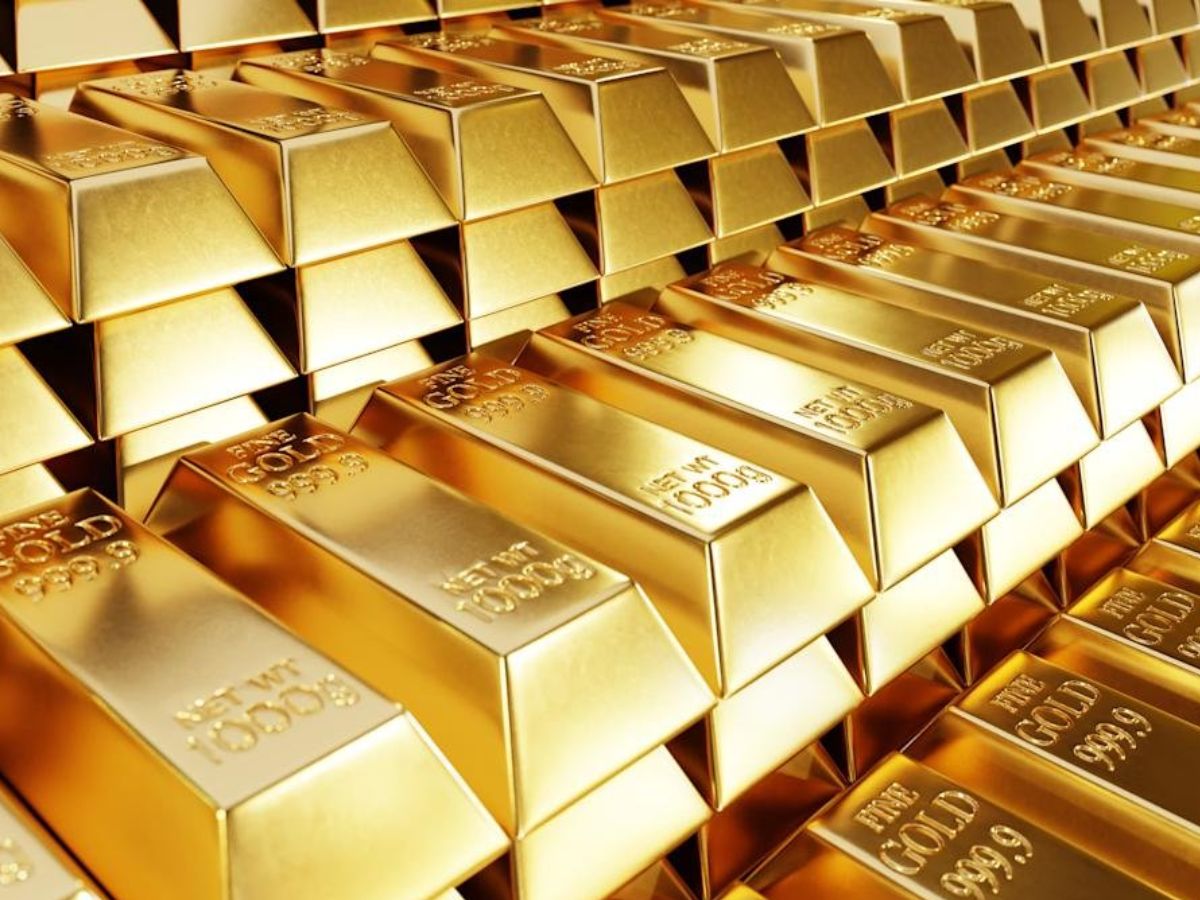
Gold is still considered one of the most valuable and credible sources anywhere in the world. In 2025, central banks were buying gold aggressively; the prices intensified to record highs. This trend Shows that gold has an enduring role as a safe asset and a reliable source against economic uncertainty.
How Does Gold Hold National Economies?
Gold reserves are important financial assets maintained by central banks and governments worldwide. They serve various purposes, such as stabilizing currency and providing a safeguard during economic uncertainty. The United States, Germany, and Italy hold the largest gold reserves globally, while India ranks 8th, just below Switzerland. It is important to note that a country’s domestic gold consumption does not influence its position in the ranking of nations with the highest gold reserves.
Historically, under the gold standard system, the value of national currencies was linked to a fixed quantity of gold. This system required countries to maintain significant gold reserves to back their money supply. For example, the United States began building substantial gold reserves in the late 19th century. The Gold Reserve Act of 1934 further strengthened this approach by transferring gold ownership from private citizens to the U.S. Treasury. Today, the United States possesses the largest gold reserves in the world, reflecting its strong economic influence and global power.
A recent database from BullionVault, which tracks central bank gold reserves, shows which countries hold the largest official gold stocks. The figures represent gold reserves in tonnes as of 2024, with the U.S. and European nations together controlling over 60% of the total reported holdings.
Top Gold-Holding Countries
| Rank | Country | Gold Reserves (Tonnes) |
|---|---|---|
| 1 | 🇺🇸 United States | 8,133.5 |
| 2 | 🇩🇪 Germany | 3,351.6 |
| 3 | 🇮🇹 Italy | 2,451.9 |
| 4 | 🇫🇷 France | 2,437.0 |
| 5 | 🇷🇺 Russia | 2,333.1 |
| 6 | 🇨🇳 China | 2,279.6 |
| 7 | 🇨🇭 Switzerland | 1,039.9 |
| 8 | 🇮🇳 India | 876.2 |
| 9 | 🇯🇵 Japan | 846.0 |
| 10 | 🇳🇱 Netherlands | 612.5 |
| 11 | 🇹🇷 Turkey | 595.4 |
| 12 | 🇵🇱 Poland | 448.2 |
| 13 | 🇵🇹 Portugal | 382.7 |
| 14 | 🇺🇿 Uzbekistan | 382.6 |
| 15 | 🇸🇦 Saudi Arabia | 323.1 |
United States Leads in Gold Reserves
The United States remains the largest holder of gold in the world, with 8,133.5 tonnes-a number that has been roughly static for decades. A majority of this gold resides at Fort Knox and the New York Federal Reserve.
These reserves, exceeding a value of more than $1 trillion at today’s market prices, represent one of the most important strategic assets supporting confidence in the USD.
Strong and Historic Gold Reserves of Europe Countries
European countries hold considerable gold stocks. Germany has 3,352 tonnes, Italy has 2,452 tonnes, and France has 2,437 tonnes. These three countries, in total, come to around 8,200 tonnes, almost rivaling the U.S. total.
These reserves date back to the post-war Bretton Woods system, when gold formed a base under the global monetary system, hence stabilizing the economies of Europe.
Rising Gold Holdings in Asia
Gold reserves in China have grown sharply, from 1,948 tonnes in 2019 to 2,280 tonnes in 2024. Beijing’s approach is part of a broader push to cut dependence on U.S. Treasury holdings and to foster greater international use of the yuan.
India, which is ranked the world’s fifth-largest economy, holds 876 tonnes, reflecting its long-standing cultural and financial affinity for gold.
Other developing markets have also built up their reserves to hedge against inflation, currency fluctuations, and geopolitical tensions: take the examples of Turkey with 595 tonnes and Poland with its 448 tonnes.
Smaller Nations Also See Gold Reserves as a Safe Haven
Outside the top 10, countries like Uzbekistan with 383 tonnes and Saudi Arabia with 323 tonnes have their gold reserves growing steadily. In such countries, which are virtually rich in energy and natural resources, gold is used to strengthen financial resiliency.
Other countries such as Thailand, Singapore, and Kazakhstan are quietly adding gold to their reserves in view of protecting their economies against possible world economic shocks. Conclusion The growth of gold reserves globally by their central banks reflects the continuing importance of gold as a safe financial asset. While the U.S. and Europe dominate these charts, emerging economies and smaller nations rely on gold to protect their economies, hedge against volatility, and ensure long-term stability.
In short, Gold reserves are a vital component of a country’s financial system, acting as a store of value and a safeguard against economic uncertainty. They help support national currencies, strengthen financial stability, and provide resilience during periods of global market volatility. The leading countries in gold holdings show a strategic effort to protect their economies while boosting investor confidence.
Also Read: Trump to Meet NYC Mayor-Elect Zohran Mamdani at the White House – What’s on the Agenda?