
The Government is working on a comprehensive overhaul of the Artificial Intelligence (AI) curriculum to align academic learning with emerging technological trends and industry requirements.
According to the Ministry of Electronics & IT, the initiative aims to improve student readiness by strengthening practical exposure, upgrading pedagogy, and addressing infrastructure gaps in advanced AI fields such as Generative AI, Machine Learning Operations (MLOps), and foundational model development.
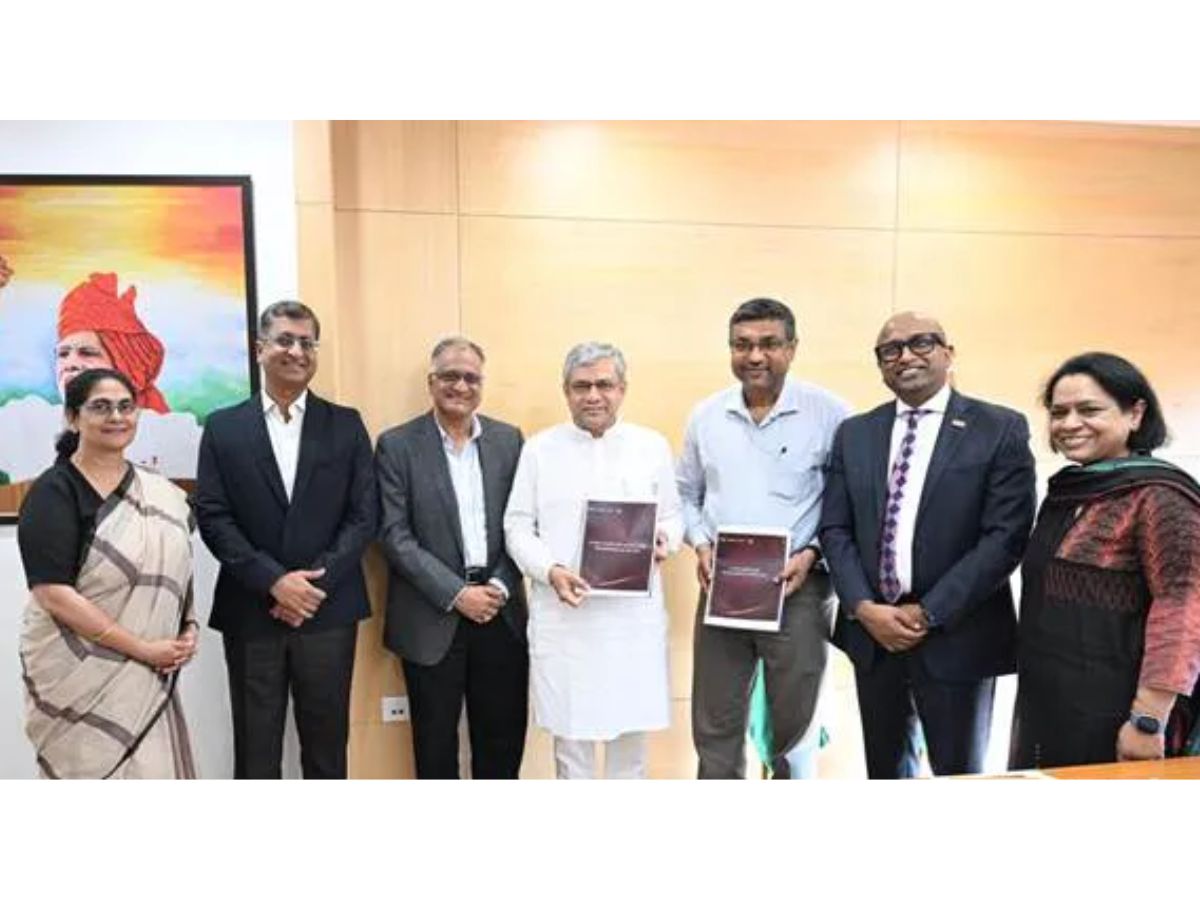
Union Minister for Electronics & IT Ashwini Vaishnaw held a high-level meeting with the AI Curriculum Taskforce and industry representatives in New Delhi regarding this initiative.
The initiative is based on a baseline study of existing B.Tech Computer Science and allied programmes across Indian institutions. The study was conducted by the Taskforce in partnership with industry experts and the National Association of Software and Service Companies (NASSCOM). It noted that while AI content has expanded in the curriculum, there remain “significant gaps in pedagogy, infrastructure, and practical exposure in fields such as Generative AI, Machine Learning Operations (MLOps) and foundational model development.”
To address these gaps, the Taskforce has recommended a shift toward application-oriented pedagogy, replacing lecture-based teaching with industry use-case-based learning from the first semester. It also proposes credit-linked curriculum integration, where AI courses are formally embedded into academic credits with a structured semester-wise rollout.
A major focus of the recommendations is increasing practical exposure from the current 25-30 per cent to 40-75 per cent, depending on the programme and specialisation. This will be supported by industry-integrated learning through capstone projects, end-to-end AI solution engineering, and the use of low-code and no-code tools.
The framework also proposes making Responsible AI and AI Governance a continuous part of the curriculum across all semesters instead of standalone modules. It further includes multiple entry-exit options, allowing students to receive a Certificate after Year 1, Diploma after Year 2, and Advanced Diploma after Year 3.
Faculty development has been identified as a key pillar of the reform. The recommendations include structured train-the-trainer programmes, curated course content, standardised assessments, modernised laboratories aligned with industry tools, and the engagement of experienced industry professionals as adjunct faculty to bring real-world expertise into classrooms.
The Taskforce also proposed a national-level shared AI infrastructure under a “triple helix model” involving government, industry, and academic institutions. This would provide equitable access to GPUs, edge devices, software stacks, and subscription-based platforms across colleges and universities.
The meeting concluded with consensus on key next steps, including assessment of infrastructure and manpower requirements, engagement with AICTE for formal adoption of the revamped curriculum in semesters five to eight of ongoing batches along with full integration for new batches, development of a structured faculty development roadmap, and a parallel track for AI literacy in non-STEM disciplines.