
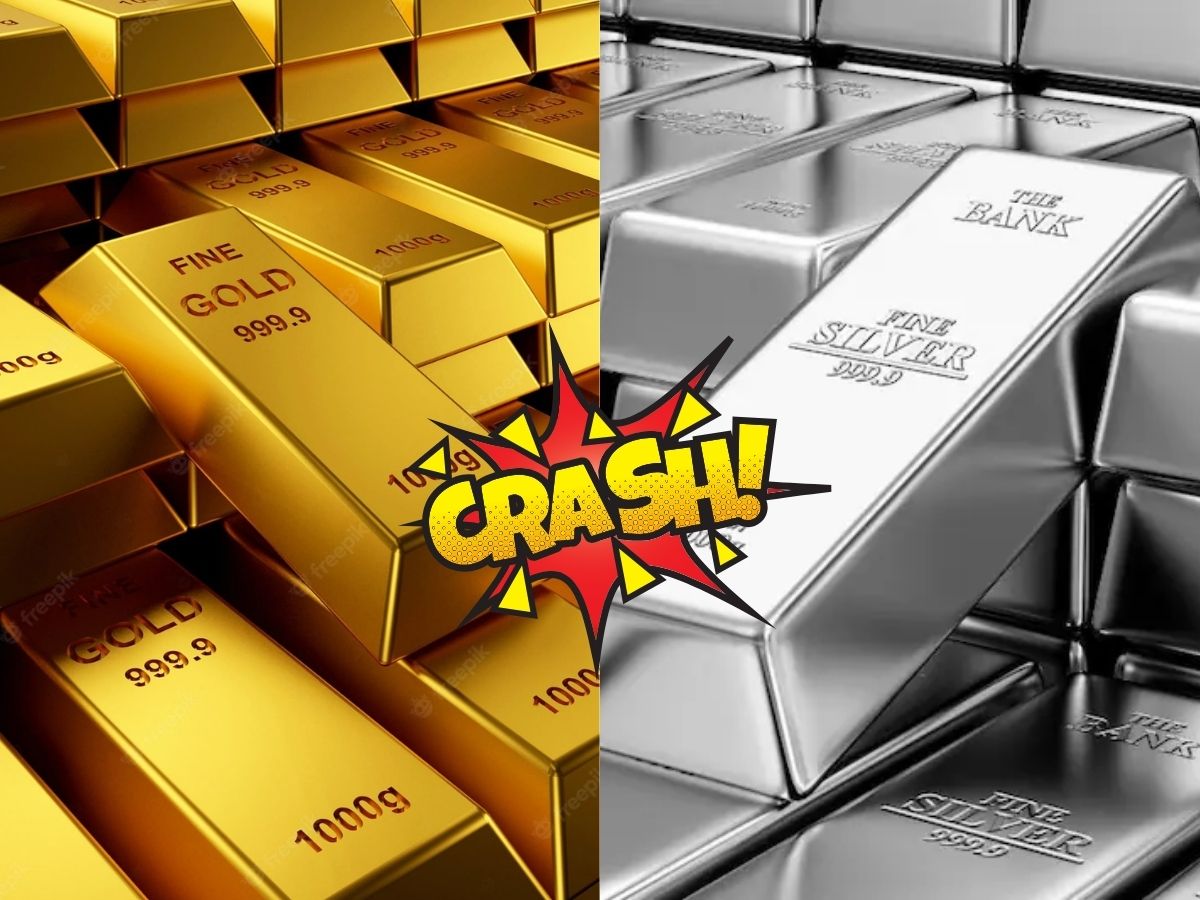
The recent crash in gold and silver prices has captured the attention of investors and market analysts alike, marking one of the most significant corrections in recent years. Have a look on the causes, impact, and lessons from the recent gold-silver crash.
The Magnitude of the Crash
On October 21, 2025, gold prices experienced a drastic decline of nearly 6%, dropping from record highs of over $4,380 per ounce to an intraday low of approximately $4,082, with some reports indicating a further correction in Indian markets. Silver, along with other precious metals like platinum and palladium, also suffered significant declines, with silver falling about 8% to around $47.89 per ounce.
Causes Behind the Sharp Fall
Several factors contributed to this sudden downturn:
- Profit-taking and market saturation: After weeks of consecutive gains, a large volume of ETF shares was liquidated, triggering panic selling and a sharp decline.
- Strengthening US dollar: A 0.7% rise in the US Dollar Index intensified the selling pressure on gold, making dollar-priced assets more expensive for foreign investors.
- Easing geopolitical tensions: Advances in US-China trade talks and improved diplomatic relations in Europe reduced the safe-haven appeal for gold and silver.
- Technical triggers: Oversold signals, breaching of support levels, and automated stop-loss orders caused accelerated declines, exacerbated by high-frequency trading algorithms.
- Market psychology: Retail investors, especially in India, exited their positions en masse as prices dropped, illustrating herd behavior and behavioral biases at play.
Impact on Markets and Industry
The crash affected various sectors:
- Mining stocks: Major miners like Newmont and Barrick lost around 5-6%, with junior miners dropping up to 10%, reflecting their high leverage to gold prices.
- Jewellery demand: In India, lower gold prices temporarily boosted consumer inquiries, while Chinese and Middle Eastern markets adopted a wait-and-watch approach.
- ETFs and liquidity: Gold ETFs saw record redemptions, with nearly 15 tons of gold being withdrawn in a single session, amplifying volatility.
Lessons from History
Historically, gold and silver crashes have been sharp but followed by strong recoveries. During the 2008 financial crisis, gold lost around one-third of its value before surging over 160% in subsequent years. Silver saw a halving in value before soaring by over 400%.
This October end 2025 crash underscores that even safe-haven assets like gold and silver are vulnerable to complex, interconnected market forces such as profit-taking, dollar strength, technical triggers, and investor psychology. While steep declines can be unsettling, history indicates that gold and silver tend to recover and retest higher levels over time. For investors, this correction offers a reminder of the importance of discipline, patience, and a long-term perspective amidst short-term volatility.