
The Federal Open Market Committee (FOMC) ended its July 30, 2025 session with a watched-for choice: the Federal Reserve kept its benchmark interest rate at 4.25%-4.5% for the fifth straight time, spurning mounting pressure for a rate reduction from the White House as well as from a number of market players. This result underscores the Fed’s continued tightrope walk—contending with persistent inflation pressures, a strong but slowing labor market, and increasing political pressure as President Trump continues to call for decreasing borrowing costs to aid the U.S. economy.
A Historic “Double Dissent”
This meeting was notable for its rare “double dissent.” Two Fed governors—Michelle Bowman (Vice Chair for Supervision) and Christopher Waller—voted for an immediate rate cut, marking the most significant discord among policymakers since 1993. Both dissenters argued for more aggressive easing to support the labor market, which, while still robust, has shown signs of softening in recent months.
Powell’s Balanced, Cautious Commentary
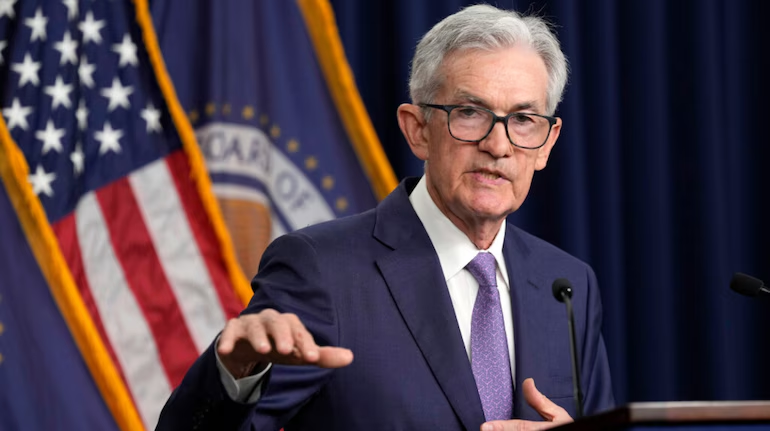
Fed Chief Jerome Powell spoke to the press in a cautious and non-committal tone. He reaffirmed the central bank’s dedication to data-driven policy and emphasized the dual mandate of the Fed: maximum employment and price stability. “The unemployment rate remains low, and the labor market conditions are robust. Inflation remains somewhat elevated,” the Fed said in its official statement.
Powell clarified that, as much as there is building expectation for a September cut, no decision has been taken on what happens next in policy. “We have made no decisions about September. We will look at all the data that is available—two more rounds of jobs and inflation numbers—before our next meeting,” Powell stressed, highlighting the Fed’s responsive stance as fresh economic data becomes available124. He recognized that the impacts of President Trump’s recent tariffs already can be seen in prices of certain products but indicated that it is not yet clear if these would create a short-term or a more sustained inflation shock.
Tariffs, Trade Tensions, and Forward Guidance
While President Trump’s tariffs—levying double-digit duties on most imports—increased the complexity of the inflation picture, Powell said the overall economic consequence is still emerging and would not push the Fed to make decisions on incomplete data. He intimated that tariff-induced inflation could eventually be transitory, while acknowledging that possible long-term effects could represent an upside risk for inflation—a situation the Fed is watching closely.
A Wait-and-See Stance
In short, the FOMC kept rates unchanged, citing ongoing economic uncertainty and a “modestly restrictive” policy approach as cautious at this time. Powell’s decisive message: the Fed is eyeing changing risks on both inflation and employment, and while a rate reduction later in 2025 is still on the table, the course ahead will rely on the totality of data over the next few months.