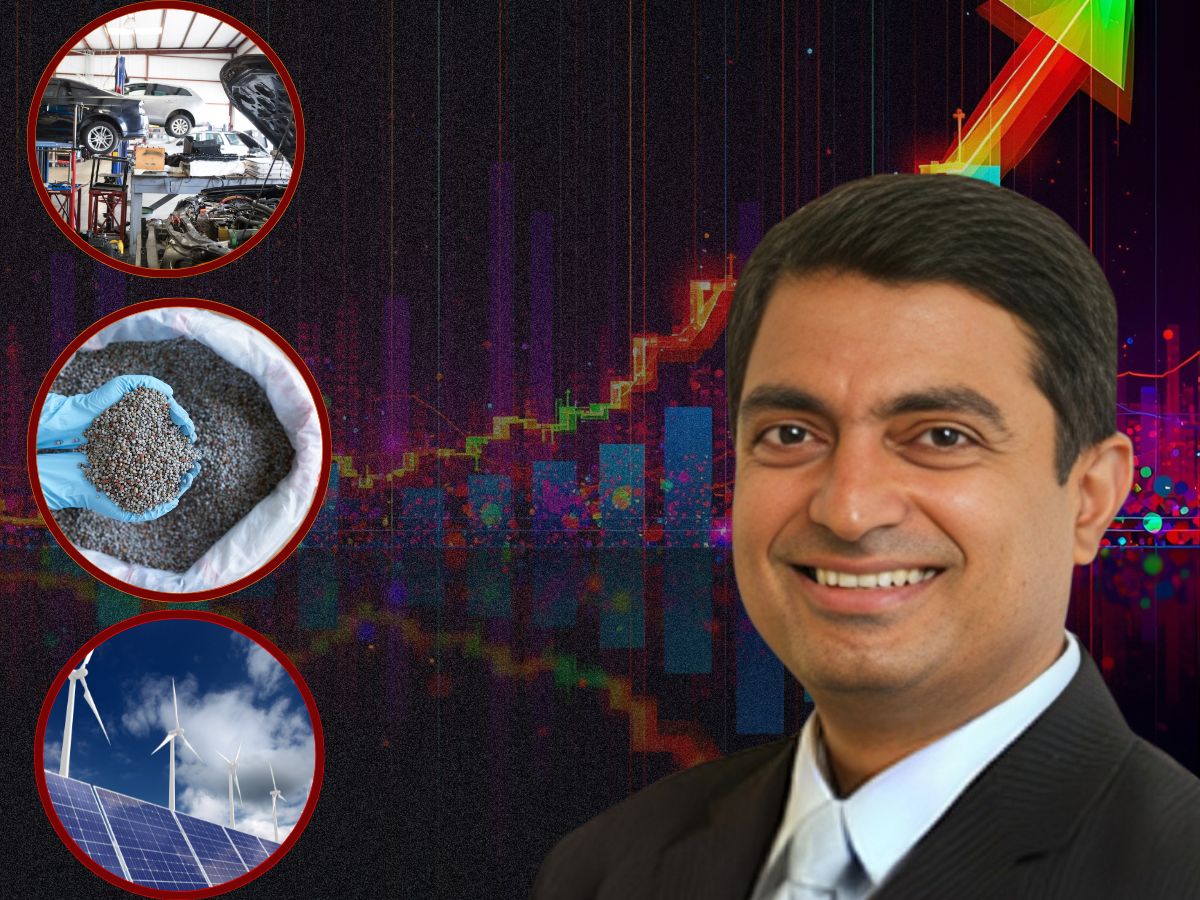
In an exclusive interview with TDG, Mr. Ram Medury, Maxiom Wealth’s Founder and CEO talked about invesment in equities with smaller capitals. He has selected dominant mid-cap and small-cap industries with growth potential in 2025. Automobiles, auto ancillaries, fertilizers, renewables, and infrastructure look promising opportunities driven by strong revenue growth, margin improvement, and positive government policies. Particularly, mid-cap automotive stocks are reporting year-on-year sales growth of 18 to 22% based on new electric vehicle launches and supply chain localization.
ALSO READ | Punjab Floods: Climatic Fluctuations Move Beyond Warnings
Fertilizer stocks are gaining from falling input costs and growing domestic consumption, while companies in the renewable energy space have reported almost 100% year-on-year growth driven by stepped-up capacity expansions. Infra stocks have also seen order books go up 25-30% on record public capex. Even with healthy fundamentals, valuations are still cheap compared to 2023 highs, ranging from 18x to 35x sector by sector.
Institutional Selling and Its Market Implications
Mr. Medury recognises a series of institutional selling in mid-cap and emerging spaces after poor quarterly performance and downgraded earnings estimates. Several companies posted net profit falls of 20-35%, leading to foreign institutional investor outflows in excess of ₹10,000 crore during Q2 2025. Macroeconomic worries like conservative central bank observation and decelerating GDP growth estimates at 6.7-6.9% have fueled risk aversion. Besides, issues of earnings quality and margin compression, specifically in auto ancillaries and infra, have triggered share price corrections of 10-16% after results. This has increased market volatility and sector rotation, leading to investors paying attention to selective, bottom-up stock picking with preference for companies having solid fundamentals.
ALSO READ | What about GST on Petrol, Diesel and Liquor? Clarify your Doubts..
Suggested Investment Strategy: Focus on Both Growth and Defense
For balancing long-term growth with defense positioning, Mr. Medury suggests prioritising quality businesses in sectors supported by multi-year demand drivers like renewables, infrastructure, and autos. Parallely, investors must invest 25-30% in defensive, low-beta segments like FMCG, healthcare, and non-cyclical financials. Asset allocation models such as the Liquidity-Safety-Growth (LSG) model are suggested, and standard portfolios can consist of 60-65% equities, 25-30% short- to medium-term debt, and 5-10% gold or silver for macroeconomic hedging. He emphasises staggering entries into risky mid- and small-cap stocks to ensure maximum returns by taking advantage of market correctives.
Impact of SEBI’s Proposed Extension of Derivatives Maturity
Medury also comments on the Securities and Exchange Board of India (SEBI) chairman’s proposal to extend derivatives contract maturities, noting immediate downward pressure on exchange-linked stocks like BSE and Angel One due to concerns over reduced brokerage income from weekly expiries. However, he highlights potential long-term benefits, including market stabilization, reduction of speculative churn, and increased institutional participation. Industry specialists project that more long-term contracts would reduce retail volatility by 20-25%, increase hedging activity by mutual funds and insurance companies by 10-15%, and enhance price discovery and risk management in the long run.
ALSO READ | ITR: How to Download Acknowledgement After Paying Tax?
Nutshell
Mr. Ram Medury’s insights display a subtle investment scenario in mid and small caps with scope of robust sectoral growth amidst continuous market corrections and changing regulatory reforms. Investors are recommended to stay disciplined, with diversified strategies balancing growth potential with defensive protection, while tracking structural reforms in derivatives markets that might impact volatility and long-term capital allocation.