In a rather shocking surprise, yet welcomed now by industry analysts and political observers alike, Nvidia and AMD, two of the biggest chip manufacturers in America, have agreed to pay 15% of their revenues from selling certain AI chips to China to the US government.
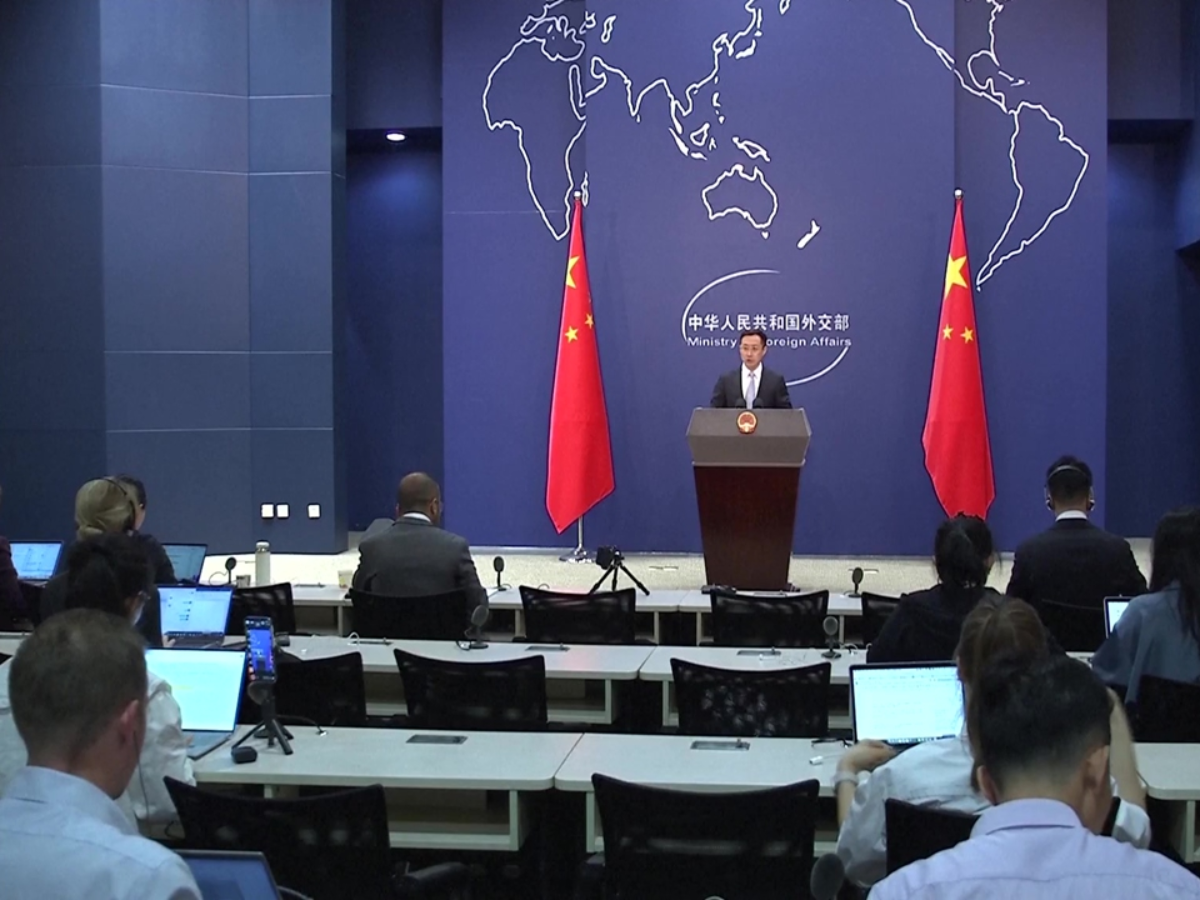
Lin Jian, a spokesman for the Chinese Foreign Ministry, stated on Monday that China has repeatedly stated its stance on the US exporting chips to China under an agreement to get export permits for the semiconductors.
This move comes only months after Trump had instituted a complete ban of such sales under national security grounds, with the decision being softened later in mid-July. Now, Washington is directly taking a share of the profits, while also allowing exports to China.
Chips Being Fought Over
The chips in question Nvidia’s H20 and AMD’s MI308 were specifically made for the Chinese market. Such chips are of less capability than their flagship products intended to comply with earlier restrictions to export.
ALSO READ: Trump wants to sell more soybeans to China as Beijing builds chip pressure in trade deal talks
But even if they do not match top-tier performance, they are the chips that now facilitate American companies to make a mark in China’s flourishing AI sector, projected at around $100 billion in value this year and almost 50% more than last year.
Industry Response
Some have called the deal “unprecedented,” with some drawing comparisons to the “golden share” Occasionally utilized in some government-corporate arrangements.
Notably, details remain murky primarily concerning how one would classify the 15% attachment, or whether similar ones could see placement on other US companies acting in China.
Given that China’s remainder will be treated as a restriction, the agreements could do both mitigative and more congenial for the long-term interests of states underlining policies that show a direct interest in gaining American investments.
From The Good and Bad Side
The deal is both good and bad for Nvidia and AMD. The Chinese market is of great revenue potential to sustain, should direct payback of 15% to the US turn off investors. In the chip-making business, strategies are laid down years ahead and an unexpected charge is of such magnitude as to upset long-term planning.
ALSO READ: US-China Trade Talks Hit Roadblock Over Chinese Oil Imports from Iran and Russia
Some analysts think the deal may be part of a grander scheme to leverage during the US-China trade talks, possibly over rare earths that are paramount to tech manufacturing.
Security Question
The matter on national security is still skeptical. While some lawmakers warn that even the toned-down AI chips could bolster China’s military and technological capabilities, some think that engagement-not restriction-is more effective to retain influence over global AI development.
The latter viewpoint seemed to have won the day due in no small part to the direct intervention of Nvidia’s CEO Jensen Huang, whose direct conversations with President Trump apparently played a crucial role in the ban’s reversal.
The immediate winners are China’s tech giants, while the US Treasury may ruefully expect up to $2 billion from the arrangement. In the long run, however, the implications, both economic and strategic, will hinge on whether this will remain an occasional case or whether this will serve as the buyer’s agreement template for US business with China.
Leading internet firms ByteDance, Tencent and DeepSeek purchased H20s prior to the US cutting off access in April, according to analysts.
ALSO READ: Senior Chinese Diplomat Linked to U.S. Relations Detained for Investigation