New Delhi [India], May 30 (ANI): In a landmark development under the Pradhan Mantri Skilling and Employability Transformation through Upgraded ITIs (PM-SETU) scheme, the National Steering Committee (NSC) has approved the Strategic Investment Plan (SIP) for the Visakhapatnam ITI Cluster in Andhra Pradesh, submitted by ArcelorMittal Nippon Steel India (AM/NS India) along with their academic partner New Age Makers Institute of Technology (NAMTECH).
The approval marks the first-ever Strategic Investment Plan to be cleared under PM-SETU and makes Andhra Pradesh the first State to operationalise an industry partnership under the scheme.
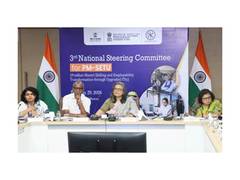
According to the statement released by the Ministry of Skill Development and Entrepreneurship on Saturday, the approval was accorded during the 3rd National Steering Committee Meeting convened by the Ministry of Skill Development and Entrepreneurship (MSDE), Government of India, at Kaushal Bhawan, New Delhi.
The milestone represents the first concrete step towards implementing PM-SETU’s vision of transforming Government ITIs into industry-managed, outcome-orientated institutions through deep partnerships between State Governments and leading industry players.
The meeting was chaired by Debashree Mukherjee, Secretary, Ministry of Skill Development and Entrepreneurship, and attended by Dilip Kumar, Director General, Directorate General of Training (DGT), along with members of the National Steering Committee.
A key outcome of the meeting was the approval of the Strategic Investment Plan for the Visakhapatnam ITI Cluster in Andhra Pradesh, submitted by ArcelorMittal Nippon Steel India. With this approval, Andhra Pradesh becomes the first State under PM-SETU to onboard an Anchor Industry Partner (AIP), marking a major milestone in the operationalisation of the industry-led hub-and-spoke model envisioned under the scheme.
Senior representatives from the Capacity Building Commission (CBC), National Council for Vocational Education and Training (NCVET), Ministry of Commerce and Industry, Ministry of Heavy Industries, Ministry of Labour and Employment, participating State Governments, industry leaders including Hindustan Aeronautics Limited (HAL), Hero MotoCorp, Bajaj Auto, ITC Limited and ArcelorMittal Nippon Steel (AM/NS) India, NAMTECH as well as development partners such as the Asian Development Bank (ADB) and the World Bank participated in the deliberations.
The approval of the Visakhapatnam Cluster represents a significant step towards transforming Industrial Training Institutes into industry-managed, outcome-orientated institutions capable of responding to evolving workforce requirements. The successful approval of the proposal is expected to serve as a model for other States seeking to strengthen industry participation in vocational education and training and accelerate the implementation of PM-SETU interventions across the country.
The National Steering Committee reviewed the overall progress of PM-SETU implementation across participating States and deliberated on policy and implementation measures aimed at strengthening industry participation, improving institutional governance, enhancing the financial sustainability of Special Purpose Vehicles (SPVs), and accelerating the operationalisation of projects under the scheme.
The discussions focused on advancing industry-led governance mechanisms, promoting outcome-based skilling, and strengthening partnerships between industry, State Governments and training institutions to ensure that India’s vocational education and training ecosystem remains responsive to emerging sectoral demands and future workforce requirements.
PM-SETU, a flagship initiative of the Government of India with an outlay of Rs 60,000 crore, aims to transform 1,000 Government ITIs through an industry-led Hub-and-Spoke model. The scheme seeks to modernise infrastructure, strengthen industry engagement, improve employability outcomes, and establish National Centres of Excellence (NCoEs) in high-growth sectors, building, through stronger government-industry partnerships, a future-ready workforce equipped for advanced manufacturing and emerging technologies.
With 32 States and Union Territories having constituted their State Steering Committees and 12 States/UTs having floated their Requests for Proposals for inviting industry participation in the selection of Anchor Industry Partners — several of which are approaching closure within the coming weeks — PM-SETU stands at the threshold of a full-fledged, industry-led implementation phase. A robust pipeline of State-industry consultations, with multiple rounds concluded and several more scheduled in the weeks ahead, reflects deepening convergence between industry interest and State preparedness.
Central and State Governments are working in close coordination to ensure that the momentum generated through preparatory milestones translates swiftly into on-ground project execution, with industry partnerships poised to drive ITI transformation at scale across the country.
In the coming months, further Strategic Investment Plans are expected to receive National Steering Committee approval, paving the way for a transformed vocational education and training ecosystem for Viksit Bharat 2047. (ANI)
(The article has been published through a syndicated feed. Except for the headline, the content has been published verbatim. Liability lies with original publisher.)