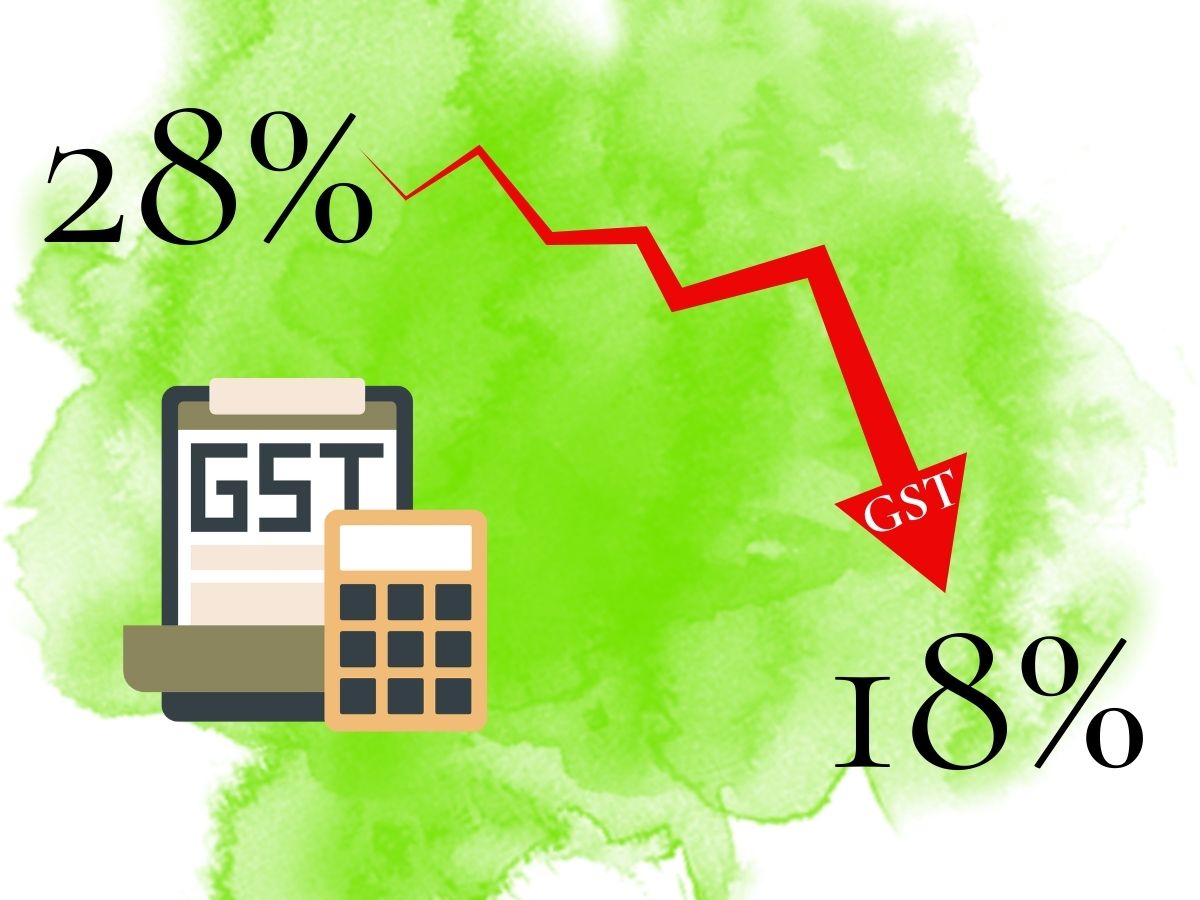
The Indian government will initiate a historic change in the Goods and Services Tax (GST) framework that will bring much-needed relief to consumers as well as businesses. Prime Minister Narendra Modi in his Independence Day speech at Red Fort, said the government is implementing “next-generation” GST reforms over Diwali, which has been touted as a “double Diwali gift” for the country.
Also Read | Big GST Reforms and Relief This Diwali, Promises the PM
GST Slab Simplification
The central proposal is a significant reduction in the number of tax slabs now imposed at 5%, 12%, 18%, and 28%. Under the new system, most goods and services will be taxed at only two main rates- 5% and 18%, to facilitate relief in the tax burden for vast sections of society, ranging from common consumer products of daily use to MSMEs (micro, small, and medium enterprises).
Major Rate Reductions
The government intends to bring down around 90% of the products now falling under the 28% slab to the 18% slab, while essential and daily-use goods will migrate to the 5% slab. This restructuring reduces the GST regime enormously, reducing the complexity of businesses and consumers when it comes to tax calculations and compliance. A specific 40% GST will still be applicable for sin and luxury items like high-end vehicles and tobacco. This top slab is essentially a sum of GST and cess and is meant to keep revenue generation from such streams without putting pressure on the common man.
Centre proposes to scrap the current slab of 12% and 28% of GST, proposes two rates of structure: 5% and 18% : Govt Sources pic.twitter.com/P7ugrmPFqm
— ANI (@ANI) August 15, 2025
Background and Rationale
This reform is one of a broader effort to streamline and overhaul the system of GST implemented in 2017, which consolidated several indirect taxes into a single framework. GST has been tweaked every so often since its introduction, but this forthcoming reform is unique in its size and aim to significantly reduce day-to-day tax burden.
Also Read | PM Modi Unveils Next-Gen GST Reforms to Boost Economy and MSME
Economic Impact and Ease of Compliance
As per Haryana government sources, the new GST rates not only lower rates of tax on common goods but are also designed to improve ease of compliance and resolution of disputes, simplifying the regulatory system for businesses. The simplification will help strengthen the economy by stimulating consumption and lowering the cost for traders and small-scale manufacturers.
Consultation and Implementation Timeline
The government has already set up a high-powered committee and engaged in consultations with state governments to finalise the new GST structure, which is expected to be rolled out close to the festive season of Diwali. This timing aligns with Prime Minister Modi’s vision to deliver a tangible economic benefit to the public during a key period of consumer spending.
Long-Term Economic Goals
This step is also strategic to aid India’s long-run economic objectives, such as ensuring self-reliance and encouraging the MSME sector that is the backbone of the nation’s economy. By lowering the number of slabs of tax and working towards a simpler mechanism, the government believes it will build a more investor-centric and consumption-oriented market ecosystem.
Overall, the new GST reforms constitute a major leap towards tax rationalisation, simplification, and enhanced affordability for consumers, which has the potential to boost domestic demand and overall economic growth in the years ahead. The “double Diwali gift” thus stands for not only festive spirit but also an important fiscal turning point in India’s economic reforms process.