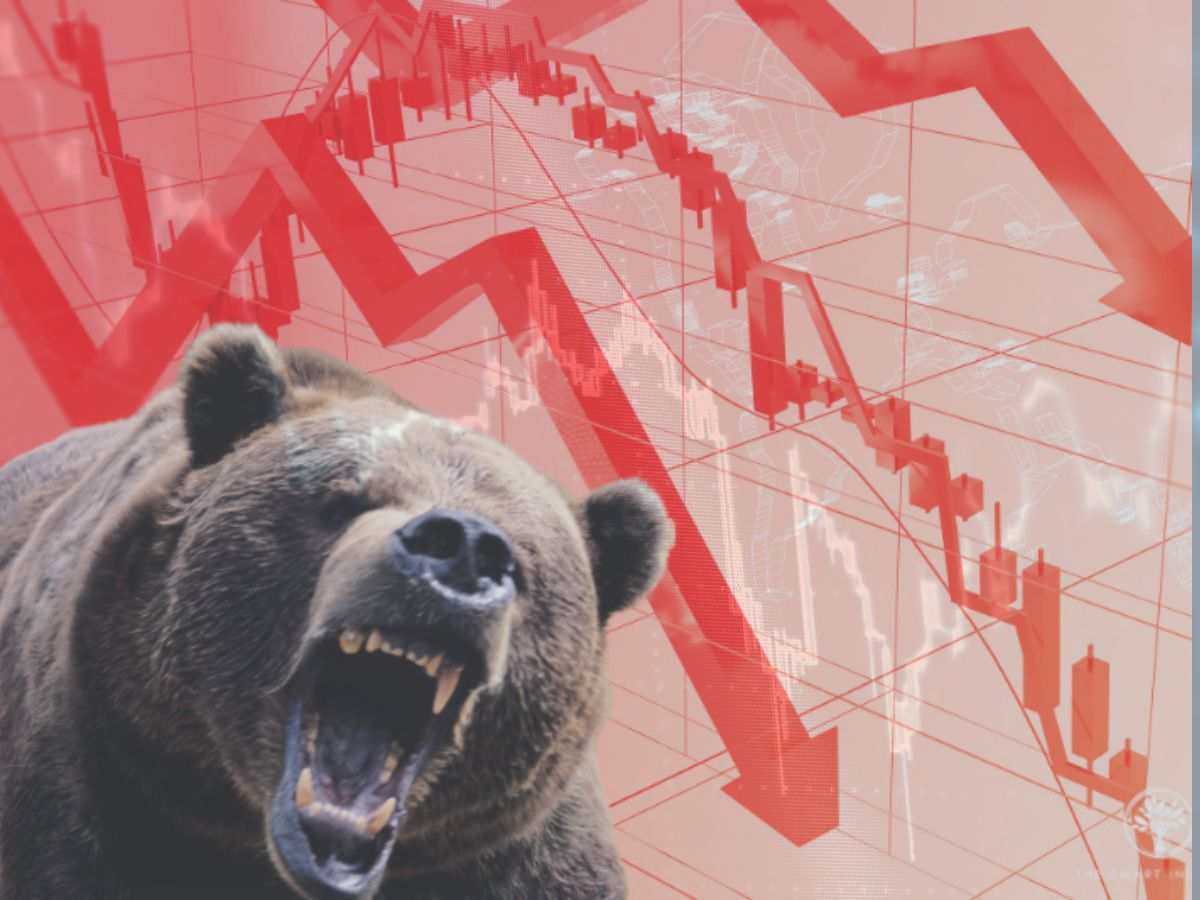
Indian share markets witnessed a significant fall today as investors struggled with the implications of the US-imposed fresh 50% tariffs on Indian products, which has fuelled trade tensions between New Delhi and Washington. The BSE Sensex fell sharply, losing around 705.97 points i.e. 0.87% to close at nearly 80,080.57, while the NSE Nifty 50 declined 211.5 points (0.85%) to 24,500.90, indicating pervasive selling pressure across the board.
Market Overview and Sectoral Performance
Introduction of the steep tariffs mainly focused on Indian export-oriented sectors such as apparel, textiles, auto parts, engineering goods, gems and jewellery, and seafood, causing investor worry over export-oriented companies. Therefore, major sectoral indices like IT, power, and realty lost around 1% each, and other broad market indices like Nifty MidCap and SmallCap also fell close to 0.9% each. Notably, the Nifty Consumer Durables index was a lone bright spot, rising 0.3%, but was overshadowed by losses elsewhere.
ALSO READ | Indian Exports worth $10 bn from this segment stand Tariffs-Exempted
Among financial and banking stocks, shares like Shriram Finance, HCL Tech, Infosys, Sun Pharma, Tata Motors, TCS, Power Grid, Bharti Airtel, IndusInd Bank, and ICICI Bank were among the largest decliners on the Nifty, with significant falls. On the other hand, stocks like Titan, Adani Ports, Asian Paints, Larsen & Toubro, Eternal, and Bajaj Finance defied the falling trend, traded in gains despite the overall negative sentiment in the market.
Global and Domestic Influences on the Market
Markets opened down, bogged down not just by tariff shock but also conflicting global signals where US markets and Japan’s Nikkei firming were countered by weakness in other Asian markets such as Hong Kong’s Hang Seng index and a fall in crude oil prices. Foreign institutional investors (FIIs) were net sellers in the uncertainty, though domestic institutional investors (DIIs) helped out with some cushioning via steady buying.
ALSO READ | Stock Recommendations: Tariff-storm Cautions the Calls
Stock Market: IPO and Mid-/Small-Cap Activity
In the IPO segment, the mainboard issues of Vikran Engineering and Anlon Healthcare continued trading, while Mangal Electrical Industries shares had a negative start. In the category of SME IPO, some issues were trading with varied investor demand. Mid-cap and small-cap shares broadly declined overall with some exceptions, an indication of risk-averse investor sentiment in riskier segments.
Key Takeaways from Stock market
- The Indian rupee ended stronger at around 87.63 per US dollar in line with movements of other currencies worldwide.
- Promoter holding of Indian companies stands at an eight-year low, as a result of higher stake selling and net selling by FIIs, which is offset to a certain extent by retail and mutual fund inflows.
- Export-oriented industries are under strain due to the high tariffs, causing concerns over India’s competitiveness in international trade.
- Investor interest is moving towards domestic consumption stocks, infrastructure, and financials in the wake of global trade uncertainties.
Overall, the Indian stock market on this day reflected the geopolitical and trade issues confronting the economy. Though short-term volatility continues due to tariffs and global uncertainty, selective buying in pockets such as consumer durables and infrastructure showed resilience among investors adjusting to evolving dynamics.
This situation highlights the need for prudent but smart investment strategies in light of changing global trade rules affecting India’s financial market.