
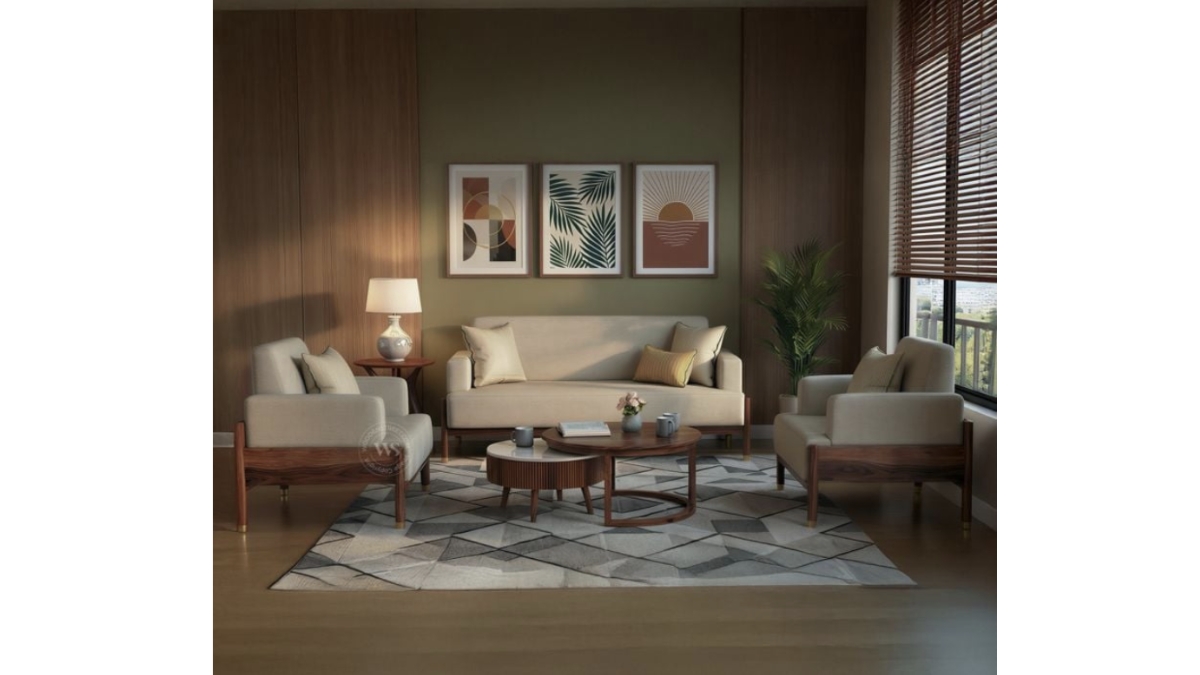
Nobody really uses their living room to “receive guests” anymore. That was always a slightly formal, old-fashioned idea anyway, a sofa set angled just so, waiting for company that mostly never came. What’s happening now in flats across Bengaluru, Pune, Delhi and Mumbai is different. The living room has turned into the room people actually live in.
It’s tied to how work has changed. Someone might be in the office three days a week and home the other two. A colleague drops by for coffee before a call. Friends land up after 9 pm on a Friday and end up staying till midnight because nobody wants to move. The room has to hold all of that, not just look nice in passing.
People are asking for different things now
Talk to anyone selling flats in a metro city, and they’ll tell you buyers keep asking about layout, specifically whether the living and dining area opens up enough to host people. Interior consultants say the same. Clients don’t want a stiff three-seater against the wall anymore. They want six or eight people to fit in comfortably, without anyone perched awkwardly on the arm of a chair.
That’s changed what a sofa needs to do. It’s not just seating; it’s basically the thing the whole room gets built around- lighting, rug placement, how people naturally end up clustering when a conversation gets going. A fair number of homeowners looking at a Wooden Sofa Set by Wooden Street are shopping with exactly this in mind. Something that works fine on a quiet Tuesday evening and still holds up when eight people show up on Saturday.
Comfort stopped being optional
Ask someone who’s spent the last couple of years half working from home, and comfort isn’t a nice-to-have anymore; it’s the whole point. The same sofa hosting Sunday’s gathering might also be where someone takes a 6 pm call two days later. That double duty has changed what people check before buying. Seat depth. How the cushioning holds up after a year, not a week. Whether the armrest is the right height for someone actually sitting there for two hours.
This is also why showroom visits haven’t gone away, even with everyone browsing online first. People shortlist on their phones, then walk into a store anyway, just to sit down and feel whether the fabric is right or whether the piece is actually the size they thought it was in photos. A screen can’t tell you that.
Small pieces matter more than people think
Coffee tables have quietly changed shape too. The rectangular block that used to sit stiffly in the centre of a room is giving way to rounder, softer versions that don’t get in the way when people move around during a conversation. A little round coffee table decor setup, a stack of books, a tray, maybe one small plant, has become something of a quiet signature in homes built for lingering rather than passing through. Round edges also just work better in a smaller flat, where sharp corners eat into space that isn’t there to begin with.
None of this is really about looks in isolation. It’s about how people actually sit, where they set down a cup, how many people they realistically host on a given weekend. Homes are being designed around that now, not around a showroom photograph.
There’s a practical side to all this too
Rents for cafes and small venues have gone up. A lot of professionals would rather host at home than book a table somewhere. So the living room has picked up a job that used to belong to restaurants: informal meetings, celebrations, the occasional serious conversation over chai. That’s not a small shift.
It’s also changed how couples and flatmates shop. Furniture decisions are being made together now, factoring in how often guests actually show up, how much space there really is, and whether a piece will still make sense in three years. Not just whether it looks good on day one.
Why this isn’t going anywhere
This isn’t a trend that fades in a season. It’s built on how people actually live and work right now, and city apartments aren’t getting bigger anytime soon. Furniture that can genuinely do double duty, comfort and hosting, chosen after someone’s actually sat on it and checked the finish in person, is likely to stay a priority rather than a passing preference.
For professionals rethinking their living room this year, the pattern is fairly obvious once you notice it. The room stopped being a formality a while ago. It’s where the workday winds down.