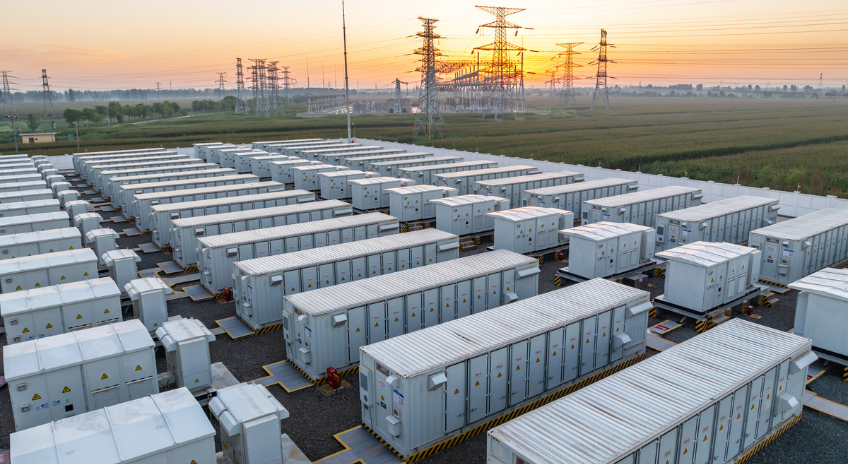
A reliable power supply is important for industrial productivity and economic stability. With the rise of renewable energy, the intermittency of solar and wind poses challenges for grid operators and energy consumers. A battery energy storage system (BESS) is a key solution that stores excess electricity for use during peak demand or low-generation periods. This technology ensures clean energy is available 24/7, making it vital for achieving energy independence.
Understanding the Battery Energy Storage System
The battery energy storage system (BESS) is a complex setup of hardware and software that stores electrical energy for future use. Unlike traditional power systems that generate and consume power immediately, a BESS uses electrochemical processes to store energy. The system mainly comprises lithium-ion battery modules, which are acclaimed for their high energy density and rapid response times. These modules are overseen by a Battery Management System (BMS) that monitors cell health, temperature, and state of charge, ensuring both safety and longevity.
The system also includes a Power Conversion System (PCS), featuring bidirectional inverters that convert Direct Current (DC) from the batteries to Alternating Current (AC) for the grid, and vice versa during charging. To optimize performance, an Energy Management System (EMS) acts as the “brain,” deciding when to store energy based on electricity prices, grid demand, or renewable output. Best-in-class systems currently achieve round-trip efficiencies above 88%, meaning very little energy is lost during storage and retrieval.
A Battery Energy Storage System is an integrated combination of hardware, software, and controls designed to store electrical energy and release it when needed. Unlike conventional power systems—where generation and consumption happen simultaneously—BESS relies on electrochemical storage to decouple supply from demand.
At its core, a typical BESS consists of:
● Battery modules (predominantly lithium-ion today), valued for their high energy density, fast response times, and declining costs.
● A Battery Management System (BMS) that continuously monitors cell voltage, temperature, and state of charge, ensuring safety, performance, and long service life.
● A Power Conversion System (PCS) with bidirectional inverters that convert DC power from batteries into AC power for the grid or loads—and back again during charging.
● An Energy Management System (EMS), the system’s “brain,” which optimizes charging and discharging based on electricity prices, grid signals, renewable generation, or operational priorities.
Modern, utility-scale systems routinely achieve round‑trip efficiencies above 88%, meaning only a small fraction of energy is lost during storage and retrieval.
A Battery Energy Storage System (BESS) is an integrated platform of batteries, power electronics, and intelligent software that stores electricity and delivers it when needed. By decoupling power generation from consumption, BESS adds flexibility, reliability, and control to modern energy systems—capabilities that are increasingly critical as renewable energy penetration rises.
At its core, a BESS uses lithium-ion battery modules, favored for their high energy density, rapid response, and improving economics. A Battery Management System (BMS) continuously monitors cell health, temperature, and charge status to ensure safe, reliable, and long-life operation. Power flows are managed through a bidirectional Power Conversion System (PCS), which converts DC battery power to grid-compatible AC and vice versa.
Overarching system intelligence is provided by the Energy Management System (EMS), which optimizes charging and discharging decisions based on electricity prices, grid conditions, renewable availability, and operational priorities. Leading utility-scale systems now achieve round-trip efficiencies above 88%, minimizing energy losses while maximizing asset value.
In short, BESS is no longer just a storage solution—it is a strategic infrastructure asset for grid stability, renewable integration, and energy cost optimization.
Must Read:- Green Fuels and the Solar Revolution
The Role of BESS in Industrial Operations
In the commercial and industrial (C&I) sectors, energy costs are often a major operational expense. Electricity pricing is rarely flat; utilities frequently charge higher “Time-of-Day” (ToD) tariffs during peak evening hours. A battery energy storage system allows businesses to engage in “peak shaving.” By discharging stored energy during these expensive peak windows, a facility can significantly reduce its “demand charges,” the fees based on the highest amount of power drawn from the grid.
Beyond cost savings, a BESS provides important grid services. It can react in milliseconds to frequency deviations, providing “frequency regulation” that prevents equipment damage and localized blackouts. In mission-critical environments like data centers or hospitals, the system functions as a seamless backup power source, filling the gap faster than traditional diesel generators can start.
In commercial and industrial operations, Battery Energy Storage Systems (BESS) reduce energy costs and improve operational resilience. By discharging stored energy during peak tariff periods, BESS enables peak shaving and significantly lowers demand charges. At the same time, its millisecond-level response provides frequency regulation that protects sensitive equipment and supports grid stability. For mission-critical facilities such as data centers and hospitals, BESS delivers instantaneous backup power, ensuring continuity of operations while conventional generators start—making it both a cost-optimization and risk-mitigation asset.
Synergy with Green Hydrogen Plants
The intersection of energy storage and green hydrogen plants marks a significant shift in industrial decarbonization. Producing green hydrogen involves using electrolyzers to split water into hydrogen and oxygen with renewable electricity. To ensure a stable power supply for the electrolyzers, a Battery Energy Storage System (BESS) is used, as solar and wind energy outputs can be inconsistent.
By integrating storage, a facility can store excess solar power during midday and continue hydrogen production through the night. This increases the utilization rate of the electrolyzer, which is a high-capital-expenditure asset. Research indicates that using surplus renewable energy for hydrogen production can reduce the required national battery storage capacity while simultaneously lowering the levelized cost of hydrogen. Reputable renewable energy companies, such as Avaada, are now co-locating storage with hydrogen facilities to create integrated, low-carbon energy hubs.
The convergence of Battery Energy Storage Systems (BESS) and green hydrogen production represents a pivotal shift in industrial decarbonization. Green hydrogen is produced by electrolyzers powered by renewable electricity, yet the variability of solar and wind generation can limit consistent operations. Integrating BESS provides the stable, dispatchable power required to run electrolyzers efficiently.
Energy storage allows surplus renewable power generated during peak solar hours to be stored and used to sustain hydrogen production beyond daylight hours. This significantly improves electrolyzer utilization—critical for assets with high capital intensity—while reducing curtailment of renewable energy. Studies indicate that channeling excess renewable power into hydrogen production can lower overall battery storage requirements at the system level and reduce the levelized cost of hydrogen. Leading renewable energy developers, including Avaada, are increasingly co-locating storage and hydrogen facilities to create integrated, low-carbon energy hubs that maximize both economic and environmental returns.
Do You Actually Need a BESS?
Determining the necessity of a storage system depends on three primary factors: energy reliability, cost structures, and sustainability mandates.
- Grid Resilience: If your operations are located in a region with frequent voltage fluctuations or power outages, a BESS is no longer a luxury. It acts as a “shock absorber,” protecting sensitive machinery and preventing costly production downtime.
- Renewable Integration: Entities with large-scale solar installations often face “curtailment,” where excess energy produced at noon cannot be used or sent to the grid. A BESS captures this “wasted” energy, enabling 24/7 renewable energy use.
- Regulatory Compliance: Many regions are introducing “Energy Storage Obligations.” For instance, new large-scale renewable projects in India may soon be mandated to include storage for at least 5% of their total capacity to ensure grid stability.
The financial case has also strengthened as technology matures. Capital costs for long-duration utility-scale storage reached approximately $125 per kWh by late 2025. With falling equipment costs and rising peak power prices, the return on investment for merchant storage projects can reach up to 24% in favorable market conditions.
Determining the necessity of a Battery Energy Storage System (BESS) depends on three primary factors: energy reliability, cost structures, and sustainability mandates.
Grid Resilience: If your operations are in a region with frequent voltage fluctuations or power interruptions, a BESS is no longer just a value-add—it becomes a resilience imperative. It functions as a buffer that protects sensitive equipment and prevents costly production downtime.
Renewable Integration: Businesses with large-scale solar installations often face curtailment when excess midday generation cannot be used or exported economically. A BESS captures this otherwise unused energy and enables more consistent, around-the-clock utilization of renewables—enhancing both asset performance and energy ROI.
Regulatory Compliance: Policy frameworks are increasingly recognizing the role of storage. In India, for example, authorities have introduced trajectories for Energy Storage Obligations (ESO) that require obligated entities to hold a minimum share of storage capacity, rising gradually to 4% by FY 2029-30 to support grid stability and renewable integration. Additionally, the Ministry of Power has mandated co-located energy storage equivalent to at least 10% of solar project capacity in future tenders, further embedding storage into renewable project design.
Financial Case: The economics of utility-scale storage continue to improve rapidly. Recent industry reports indicate that capital costs for long-duration BESS projects have dropped to roughly USD 125/kWh for utility-scale systems as of late 2025, reflecting technology maturity and manufacturing scale. With declining equipment costs and rising peak power prices, merchant storage projects can deliver compelling returns under favorable market conditions, particularly where value streams include arbitrage, demand charge reduction, and ancillary services.
Final Thoughts
Investing in a battery energy storage system enhances operational resilience and financial efficiency. As energy dynamics evolve, the ability to store power is crucial for maintaining competitiveness. Whether supporting a green hydrogen facility or stabilizing a regional grid, BESS technology effectively addresses the intermittency of renewable energy. By leveraging data-driven benchmarks and technical standards, organizations can successfully transition to a reliable, cleaner energy model.